
You open your energy bill and your stomach drops! Why is my heating bill so high?
And you are thinking – not again.
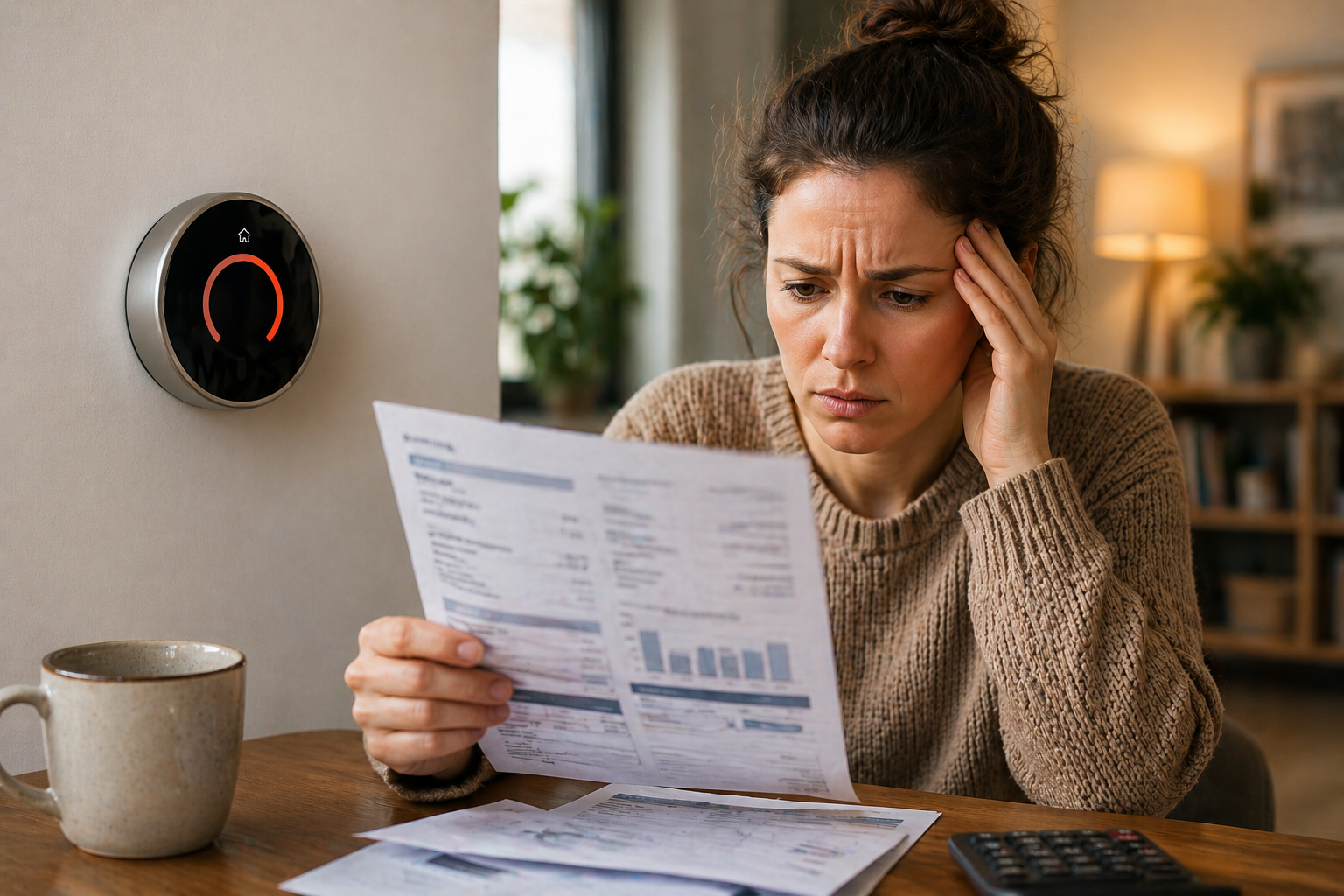
It happens to almost everyone. And the frustrating part? The problem is usually not your boiler, not some expensive repair waiting to happen, and not bad luck.
In most cases it is a handful of small thermostat habits quietly running up your bill every single day.
The good news: most of these are free to fix. Right now. Today.
Some links in this guide may earn us a small commission at no extra cost to you. This helps support the site so we can keep creating helpful content.
This guide walks you through 11 of the most common mistakes and shows you exactly what to do about each one.
Researched using guidance from the US Department of Energy, ENERGY STAR, Citizens Advice, Which?, the BBC, and leading HVAC professionals.
Why Is My Heating Bill So High?
- If your heating bill is higher than expected, it is usually caused by a few small thermostat habits rather than one big problem.
- The most common causes are setting the temperature too high, constantly adjusting it, leaving heating on when no one is home, and not using a proper schedule.
- The good news is that fixing just a couple of these can start lowering your energy costs within weeks.
Here are the 11 thermostat mistakes most likely driving up your heating bill:
1. Setting the Temperature Too High
What is the best thermostat temperature to save money?
The most efficient thermostat setting for most homes is between 18°C and 21°C (64°F to 70°F).
Lowering your thermostat by just one degree can reduce heating costs by up to 10% over time, depending on your usage and climate.
Most of us just pick a number that feels comfortable and never revisit it. The problem is that “comfortable” tends to creep upwards over time, especially in winter when it is cold outside and tempting to just nudge it a little higher.
The numbers are eye opening. The BBC reports that turning your thermostat down by just one degree could save UK households up to £73 a year. EDF Energy puts the figure closer to £80 per degree. In the US, the Department of Energy confirms that adjusting your thermostat by 7 to 10 degrees Fahrenheit for eight hours a day can cut your heating and cooling bill by as much as 10% a year.
The EPA’s ENERGY STAR programme points out that for the average American home, heating and cooling already accounts for more than $900 a year. So even a small reduction adds up fast.
Despite all of this, EDF Energy reports that 2.7 million UK households are running their thermostats at 25°C. That is warmer than most offices. And far warmer than most people actually need.
The recommended comfort range from the Energy Saving Trust, British Gas, and Citizens Advice is between 18°C and 21°C (64°F to 70°F). Try this:
- Drop your thermostat by one degree this week
- Give it a few days before you judge it
- Throw on a jumper or grab a blanket in the evenings
You probably will not notice the temperature difference. You will notice it on your bill.
* One important note from the BBC: if you are elderly, ill, or have young children, staying above 18°C is advised for health reasons.
2. Constantly Adjusting the Thermostat
Someone gets cold. They bump it up. Someone else gets warm. They turn it down. Repeat all day. Sound familiar? This is one of the most common heating habits and one of the most expensive.
Here is something most people do not know: turning your thermostat up higher does not heat your home faster. EDF Energy is very clear on this. Raising the thermostat does not change the temperature of the water in your radiators or the speed your system works.
It just means the boiler will not switch off until it hits a higher target. So it runs for longer, burns more gas, and costs you more money. British Gas calls this out directly as one of the most common heating myths around.
American HVAC professionals agree. Jack Lamb, president of Bloomfield Cooling, Heating and Electric, puts it plainly:
“HVAC units are most efficient when maintaining a constant temperature. Anything above a five degree differential will make the unit work harder and drive up your utility bill.”
Sig Cox Heating and Air Conditioning add that every time you demand a new heating cycle, your system restarts from scratch. That means more energy burned and extra wear on the compressor every single time.
The fix is simple:
- Set a temperature you are comfortable with
- Leave it there
- If you have a smart or programmable thermostat, let the schedule do the work
3. Leaving the Heating On When You’re Not Home
Is it cheaper to leave the heating on all day?
No, it is not cheaper to leave the heating on all day.
Heating only when needed using a schedule is more efficient because homes lose heat over time. Keeping heating on in an empty house wastes energy and increases your bill.
Homes lose heat throughout the day regardless. Heating an empty house is just wasted energy.
But switching it off completely is not the answer either. Sig Cox Heating and Air Conditioning point out that when you come home to a freezing house and crank the heat back up, your system has to work flat out for an extended stretch just to recover.
Nashville Electric Service advise homeowners to lower the thermostat by several degrees when out rather than switching off entirely. This avoids the energy spike on your return and protects pipes from freezing in cold weather.
This is where smart thermostats start to make a real difference.
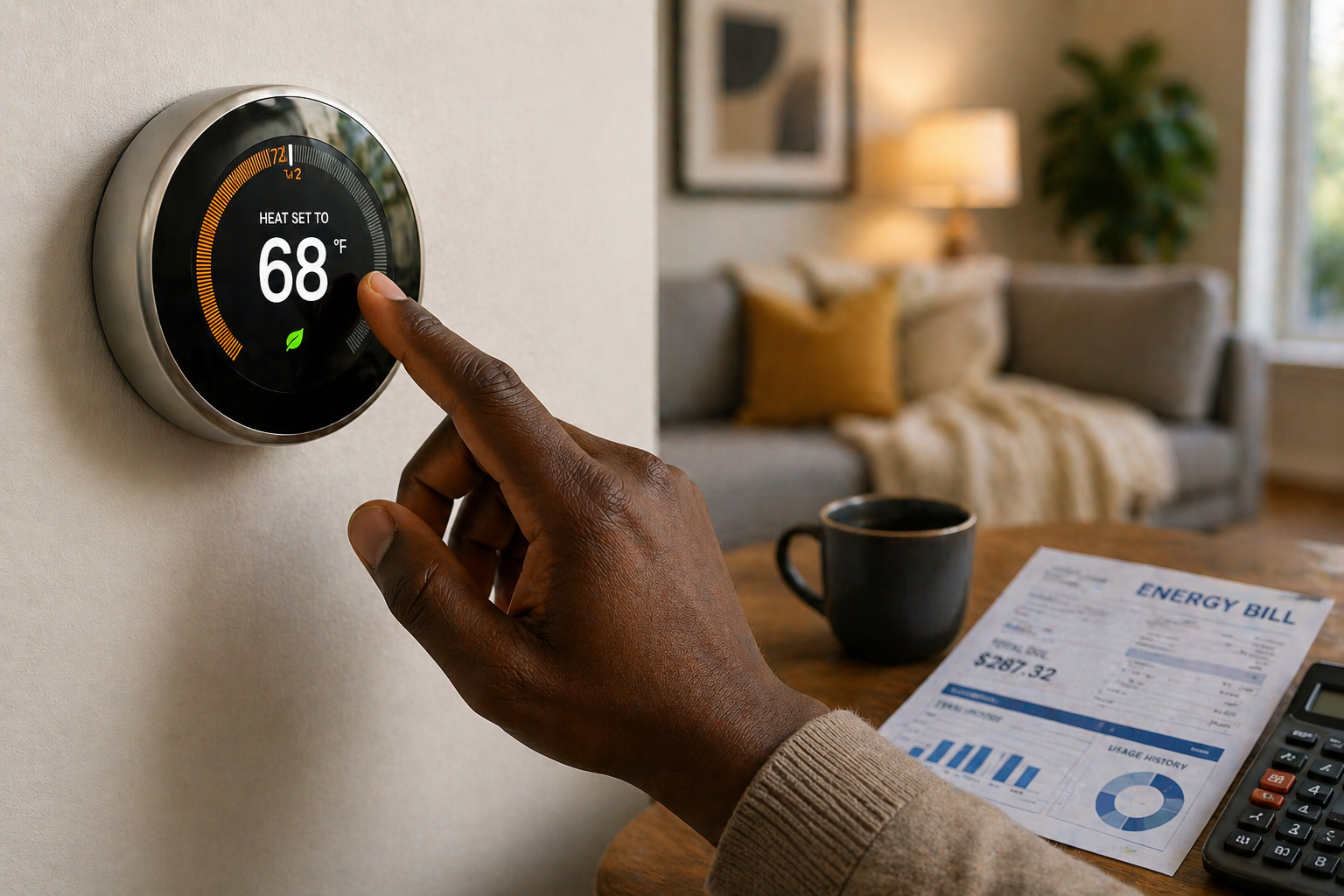
Models like the Google Nest and ecobee can detect when you leave and adjust the temperature on their own, then warm your home back up before you walk through the door.
If you are considering an upgrade, see our guide to the best smart thermostats for home to compare the most reliable options for different budgets. You can also check the latest price of the Google Nest Thermostat on Amazon.
The fix:
- Use a timer or programmable thermostat to drop the temperature while you are out
- Set it to warm back up 30 minutes before you return
- Better still, upgrade to a smart thermostat that handles this automatically
4. Poor Thermostat Placement
Your thermostat only knows what the air around it feels like. If that air is giving it bad information, your whole heating system responds to a problem that does not exist.
Which? is clear: your thermostat needs a free flow of air and should not be blocked by furniture, curtains, or anything else. Citizens Advice adds that it should be in a central location, not tucked behind a sofa or next to a radiator.
North HVAC Services, an American heating specialist, flags the same issue: a thermostat near a heat source or in direct sunlight will give inaccurate readings and cause your system to run unnecessarily.
Common problem spots include:
- Near windows or exterior doors (cold draughts make the thermostat think the whole house is freezing)
- Next to a lamp, oven, or in direct sunlight (makes it think the house is warmer than it is)
- In a spare room or hallway that heats up quickly (shuts the heating off before the rooms you use are actually warm)
Your thermostat should be on an interior wall, in a room you use regularly, away from windows, doors, direct sunlight, and anything that gives off heat.
Which? suggests that if you have a smart thermostat that can be moved, it is worth trying a few different spots to find the most accurate location. If you cannot move yours easily, a model with remote sensors such as the ecobee can read temperatures across multiple rooms and give a much more accurate picture of your home.
5. Not Using a Schedule
If your thermostat is set to the same temperature all day and all night, you are almost certainly paying to heat an empty house for several hours every day.
The US Department of Energy confirms that using a programmable thermostat to set different temperatures at different times of day can save as much as 10% a year on energy costs.
Citizens Advice recommends turning the heating on around 30 minutes before you need it and off around 30 minutes before you stop needing it. This may vary depending on how quickly your home heats and cools.
A typical energy saving schedule for a working household might look like:
- 6:00am: Heat up before everyone wakes
- 8:00am: Drop back while the house is empty
- 4:00pm: Warm back up before people get home
- 10:00pm: Drop to a lower overnight temperature
If you have a programmable thermostat, set a weekly schedule today. It takes about ten minutes and saves money every single day after that.
If your thermostat does not support scheduling, our guide to the best smart thermostats under $100 covers affordable options that make it easy.
6. Ignoring Drafts and Insulation
Sometimes your thermostat is doing everything right.
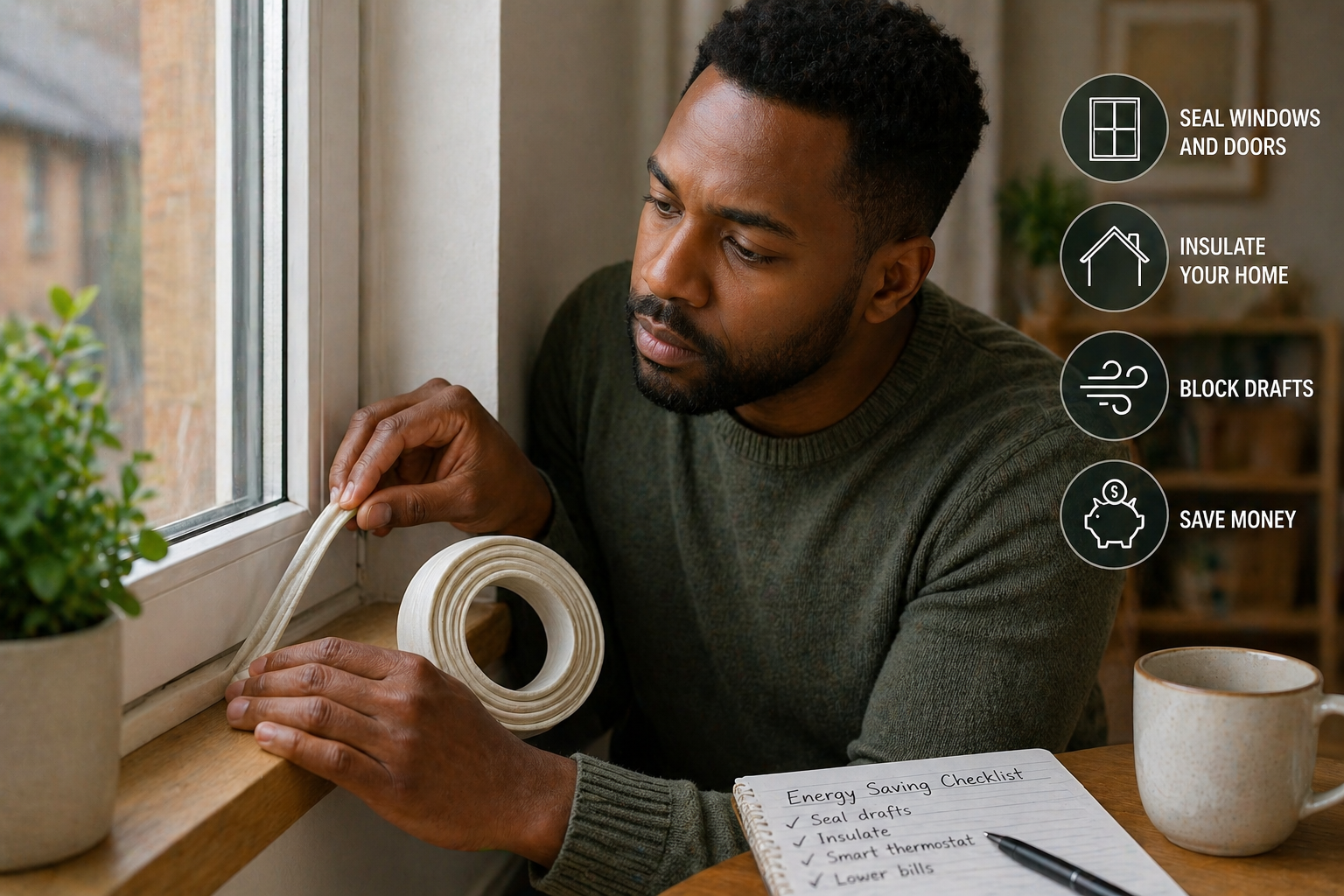
The problem is that heat is escaping faster than your system can replace it, so the thermostat keeps calling for more heat and your bill keeps climbing.
George Pearson, head of technical services at Retrofit West, told the BBC that draught proofing is the single most cost effective thing most homeowners can do. He specifically recommends sealing gaps around skirting boards, letterboxes, and even light fittings.
US News echoes this, with heating professionals advising that a properly sealed and insulated home maintains comfortable temperatures with far less demand on the heating system.
Citizens Advice lists the most common draught locations as:
- Around windows and doors
- Unused chimneys
- Floorboards and skirting boards
- Loft hatches
- Wall openings for pipes
Walk around your home on a cold day and check for cold air coming in around these spots. Use self adhesive strips, rubber seals, or draught excluders to block them. Even simple fixes like a door brush or letterbox flap add up over a whole winter.
One note from Citizens Advice: do not seal everything completely. Some airflow is needed to prevent condensation and mould.
7. Outdated or Inaccurate Thermostat
Older dial and slider thermostats are often inaccurate by several degrees. If yours thinks your home is 18°C when it is actually 21°C, your heating will keep running long after it is needed. That is pure wasted energy.
Which? points out that many heating systems do not use their boiler’s full capabilities. Modern controls include useful features such as:
- Load compensation: the boiler adjusts how hard it works based on how much heat is actually needed
- Weather compensation: the system accounts for outdoor temperature when deciding how hard to run
Which? also notes that under the UK’s 2018 Boiler Plus regulation, new boiler installations are legally required to include at least one of these features. Many older setups have neither.
North HVAC Services adds that modern smart thermostats go even further, with remote smartphone control, automatic scheduling, and detailed energy reports that show exactly where your money is going.
Place a separate room thermometer near your thermostat and compare the readings. If they differ by more than a degree or two, your thermostat may need replacing.
You can check the price of a reliable digital room thermometer on Amazon to test your current thermostat’s accuracy. Then see our smart thermostat comparison guide for replacement options at every budget.
8. Not Using Eco Mode
Ask ten people whether they have ever used their thermostat’s Eco mode. Most will say they did not know it existed. If that is you, you are leaving easy savings on the table.
British Gas explains that most modern combi boilers can pre heat water so you get instant hot water from the tap. Eco mode turns this off, meaning the boiler only heats water when you actually need it. That alone reduces unnecessary energy use throughout the day.
On your thermostat, Eco or Away mode sets the heating to a low baseline temperature rather than switching off entirely. This avoids the problems that come with a completely cold home, including condensation, mould, and frozen pipes, while using far less energy than maintaining your normal comfort temperature.
Nashville Electric Service makes the same recommendation for American homeowners: lower the thermostat by several degrees when away rather than switching off entirely.
Find Eco or Away mode in your thermostat settings and set it up for when you go out or go to bed. On a Google Nest or similar smart thermostat, this can happen automatically when it detects you have left home. It takes five minutes to set up and costs absolutely nothing.
9. Short Cycling (System Turning On and Off Too Frequently)
Short cycling is when your heating system switches on and off in rapid bursts rather than running in longer, steady cycles. If you have noticed your boiler or HVAC firing up every few minutes and then stopping again almost immediately, this is what is happening. And it is costing you.
Sig Cox Heating and Air Conditioning explain that HVAC systems are most efficient during longer, steady runs. Every time the system restarts from scratch, it burns a burst of energy just to get going again. Lots of short cycles means lots of these energy spikes, plus extra wear on your compressor over time.
The US Department of Energy confirms that systems running at consistent temperatures are simply more efficient than those constantly stopping and starting.
For UK homeowners, boiler flow temperature is worth looking at here too. Both the BBC and EDF Energy highlight the savings from lowering your boiler’s flow temperature. George Pearson of Retrofit West told the BBC that most people have their flow temperature set to 60°C, but dropping it to 55°C or even 45°C on a combi boiler can reduce running costs. EDF Energy estimates this change alone could save a typical household up to £112 a year.
One important safety note from Citizens Advice: if you have a system or regular boiler with a separate hot water cylinder, do not set the flow temperature below 65°C. Lower temperatures can allow harmful bacteria to develop in the water.
The fix:
- Check your thermostat placement first as a poorly placed thermostat is one of the most common causes of short cycling
- Look at reducing your boiler flow temperature if you have a combi boiler
- If the problem continues, book an annual boiler service. The BBC notes that a well maintained system runs more efficiently and avoids more costly problems down the line
10. Incorrect Heat Pump Settings
If you have a heat pump rather than a traditional gas boiler or furnace, this section is especially important. Heat pumps are brilliant pieces of kit, but they behave very differently from a boiler. Treating them the same way is one of the most expensive mistakes you can make.
Citizens Advice are explicit: do not adjust any heat pump settings until you understand how the change will affect the system. If you want to change heating times or flow temperature, contact your installer first, or your landlord if you are renting.
The US Department of Energy explains the core issue clearly. A gas boiler heats your home quickly at high temperatures. A heat pump is designed to run at lower temperatures over longer, steadier periods.
Setting the thermostat back aggressively when a heat pump is in heating mode forces it to run inefficiently and often triggers the backup electric resistance heating, which is significantly more expensive to run.
The DOE’s advice is straightforward: maintain a moderate, consistent temperature rather than making frequent adjustments. Some manufacturers now make specially designed programmable thermostats for heat pumps that manage setbacks intelligently without triggering costly backup heat.
The fix:
- Run your heat pump at a steady temperature and resist the urge to crank it up when you feel cold
- Avoid switching it on and off frequently
- Check out our heat pump thermostat settings guide for specific advice on getting the most efficiency from your setup
11. Not Upgrading to a Smart Thermostat
Do smart thermostats really save money?
Yes, smart thermostats can save money when used correctly.
Most households save around 8% on heating and cooling costs, with some seeing savings of 10% or more by using scheduling, automation, and energy tracking features.
If you are still running a basic dial or 7 day programmer, you are almost certainly leaving money on the table. But let us be honest about what you can realistically expect.
The EPA’s ENERGY STAR programme is the most authoritative source on this in the US. Their verified data shows that ENERGY STAR certified smart thermostats save an average of around 8% on heating and cooling bills, roughly $50 per year for a typical household. Given that the average American household already spends more than $900 a year on heating and cooling, that is a meaningful saving.
Some households do considerably better. Sig Cox Heating and Air Conditioning cite EPA estimates suggesting a properly used smart thermostat can save an average of $180 per year. US News reports that some Nest users have seen savings of 12% to 15%.
Here is the honest bit though. The BBC, citing research from the American Council for an Energy Efficient Economy, reports that smart thermostats enable roughly a 10% reduction in heating and cooling per household on average. However, a study of Honeywell smart thermostat data from nearly 1,400 households found that users often cancelled out those savings by constantly overriding the scheduled programmes.
The technology works. But you have to let it work.
A few things to check before you buy:
- UK buyers: Which? recommends confirming your smart thermostat is compatible with your specific boiler model, particularly if you have a modulating boiler
- US buyers: Sig Cox Heating and Air Conditioning advise checking whether your home has a C wire for consistent power, and confirming compatibility with your system type, especially if you have a heat pump
Top picks to consider:
- Best overall: Google Nest Learning Thermostat — learns your routine and handles everything automatically. Check the latest price on Amazon
- Best for multi room control: ecobee Smart Thermostat Premium — includes room sensors and built in Alexa. Check the latest price on Amazon
- Best budget option: See our best smart thermostats under $100 guide
- Need help fitting one? Read our how to install a smart thermostat guide
Which Thermostat Saves the Most Money Right Now?
If you want to cut your heating bill quickly, the biggest single impact usually comes from upgrading to a thermostat that manages your heating automatically.
Smart thermostats like the Google Nest Learning Thermostat and the ecobee Smart Thermostat Premium adjust temperatures based on your habits, reduce heating when you are out, and stop unnecessary energy use throughout the day. Most households see a noticeable difference within the first month.
See our full comparison of the best smart thermostats for home to find the most cost effective option for your setup and budget.
Key Takeaways: 11 Mistakes at a Glance
| Mistake | Quick Fix |
|---|---|
| Setting the temperature too high | Drop by 1 to 2 degrees. Your bill will notice even if you do not. |
| Constantly adjusting the thermostat | Set it and leave it. Your system works better that way. |
| Leaving heating on when not home | Use a schedule or smart thermostat with geofencing. |
| Poor thermostat placement | Interior wall, central room, away from windows and heat sources. |
| Not using a schedule | Ten minutes to set up. Saves money every day after that. |
| Ignoring drafts and insulation | Seal gaps around windows, doors, and skirting boards. |
| Outdated or inaccurate thermostat | Test with a separate thermometer. Replace if more than a degree out. |
| Not using Eco mode | Five minutes to activate. Often automatic on smart thermostats. |
| Short cycling | Check thermostat placement first. Book a service if it continues. |
| Incorrect heat pump settings | Steady temperature, no frequent adjustments. Ask your installer if unsure. |
| Not upgrading to a smart thermostat | Worth doing, but let it run without constantly overriding it. |
Frequently Asked Questions
Why is my heating bill suddenly so high?
Usually a combination of small things: colder weather, a changed thermostat setting, or a boiler that needs a service. Start by checking your thermostat and comparing usage to the same time last year.
What is the most efficient temperature to set a thermostat?
Between 18°C and 21°C (64°F to 70°F) for most households, according to the Energy Saving Trust, Citizens Advice, and the US Department of Energy.
Does turning the thermostat up high heat a house faster?
No. A very common myth. Your system heats at the same rate regardless of the target. A higher setting just means it runs for longer.
Is it cheaper to leave the heating on all day at a low temperature?
No. The Energy Saving Trust is clear: heating only when you need it using a programmed schedule is more efficient.
How much can a smart thermostat save?
Around 8% on average according to EPA ENERGY STAR data, roughly $50 per year for a typical US household. Some households save considerably more.
Where should a thermostat be placed?
On an interior wall, in a regularly used room, away from windows, heat sources, and direct sunlight.
What is short cycling?
When your system switches on and off in rapid bursts instead of longer steady cycles. Usually caused by a badly placed thermostat or an incorrectly sized system.
Should I turn my thermostat off at night?
No. Set a lower overnight temperature of around 15°C to 16°C (60°F) instead. This protects pipes and avoids the energy spike from heating a very cold home in the morning.
Want to Lower Your Heating Bills?
If your heating bill is stressing you out, you are not alone and you are not stuck.
The fixes in this guide range from completely free (adjusting a setting, sealing a draught) to a one off upgrade that pays for itself within a year or two.
Start with the quick wins: check your temperature setting, review your schedule, and find the Eco mode on your thermostat. Those three changes alone could make a noticeable difference before your next bill arrives.
When you are ready to take the next step, see our guide to the best smart thermostats for home for options that fit every budget, from simple programmable models to fully automated systems that do the hard work for you.
Sources
- US Department of Energy
- EPA ENERGY STAR
- EPA ENERGY STAR FAQs
- US News and World Report
- Bloomfield Cooling, Heating and Electric
- North HVAC Services
- Sig Cox Heating and Air Conditioning
- Which?
- Citizens Advice
- BBC News
- BBC News Technology
- British Gas
- EDF Energy
- Nashville Electric Service
Reviewed by The Thermo Expert Team
The Thermo Expert Team researches and compares smart thermostats, heating systems, and common HVAC issues to provide clear, practical advice for homeowners. Our content is based on manufacturer documentation, real user experiences, and industry research to help you understand problems quickly and choose the right solution with confidence.