
Quick Answer
Nest vs Ecobee multi room homes comparisons are increasingly important for homeowners dealing with uneven temperatures, hot and cold spots, or multiple floors that never feel quite right. For most homes, both Nest and Ecobee are excellent smart thermostats.
However, for multi-room homes or houses with uneven temperatures, Ecobee is usually the better choice.
Its built-in room sensors and better temperature balancing make it more effective at keeping multiple rooms comfortable, while Nest focuses more on automation and learning your schedule.
Some links in this guide may earn us a small commission at no extra cost to you. This helps support the site so we can keep creating helpful content.
Choosing between Nest and Ecobee is one thing, but choosing the right thermostat for a multi-room home is a completely different challenge.
If your home has hot and cold spots, rooms that never reach the right temperature, or multiple floors with uneven heating, the thermostat you choose matters far more.
In this guide, we compare Nest vs Ecobee specifically for multi-room homes — focusing on room sensors, temperature balancing, and real-world performance.
Want the full breakdown? Keep reading for a detailed comparison.
Nest vs Ecobee for Multi-Room Homes: Key Differences
In most homes, a single thermostat controls the entire house — but it only measures temperature in one location.
That’s why many homes experience:
- Upstairs too hot, downstairs too cold
- Bedrooms colder than living areas
- Constant temperature adjustments
The solution is a thermostat with room sensors that can balance temperatures across multiple spaces.
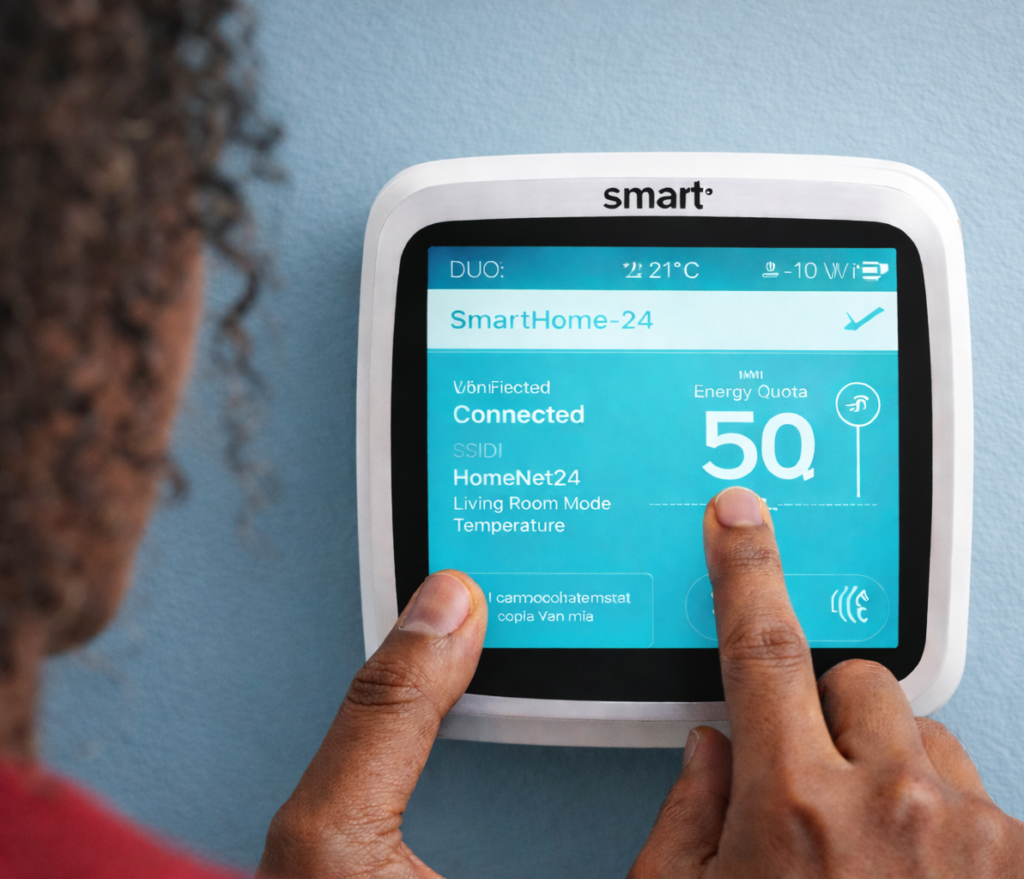
Nest vs Ecobee Room Sensors Compared
This is the biggest difference between Nest and Ecobee for multi-room homes.
Ecobee:
- Comes with a room sensor included
- Supports multiple sensors out of the box
- Actively balances temperature across rooms
- Designed specifically for multi-room control
Nest:
- Sensors are sold separately
- More limited control over multiple rooms
- Focuses more on learning behaviour than balancing rooms
Verdict: Ecobee is significantly better for multi-room temperature control.
Check Latest Price on Amazon
Best choice for uneven temperatures.
If your main problem is uneven temperatures, Ecobee is usually the better choice.
Its room sensors allow it to prioritise different rooms at different times of day — something Nest struggles to match.
For example:
Focus on living areas during the day
Focus on bedrooms at night
Why Most People Buy It
- Saves money automatically with no effort needed
- Learns your habits within days
- Works with most heating systems, including heat pumps
- Can be controlled from anywhere via smartphone
- Looks premium and modern in any home
If your home struggles with hot and cold spots, see our full guide.
Need help installing? Follow our full guide.
Not sure if you need extra wiring? Read this.
What Is the Google Nest Learning Thermostat?
The Google Nest Learning Thermostat (3rd Generation) is a smart thermostat that learns your daily schedule and programs itself automatically — no manual setup required.
It works with most heating and cooling systems, connects to your smartphone via the Nest app, and integrates seamlessly with Amazon Alexa and Google Assistant.
It is compatible with 95% of 24V heating and cooling systems including gas, electric, forced air, heat pumps, radiant, oil, hot water, solar and geothermal.
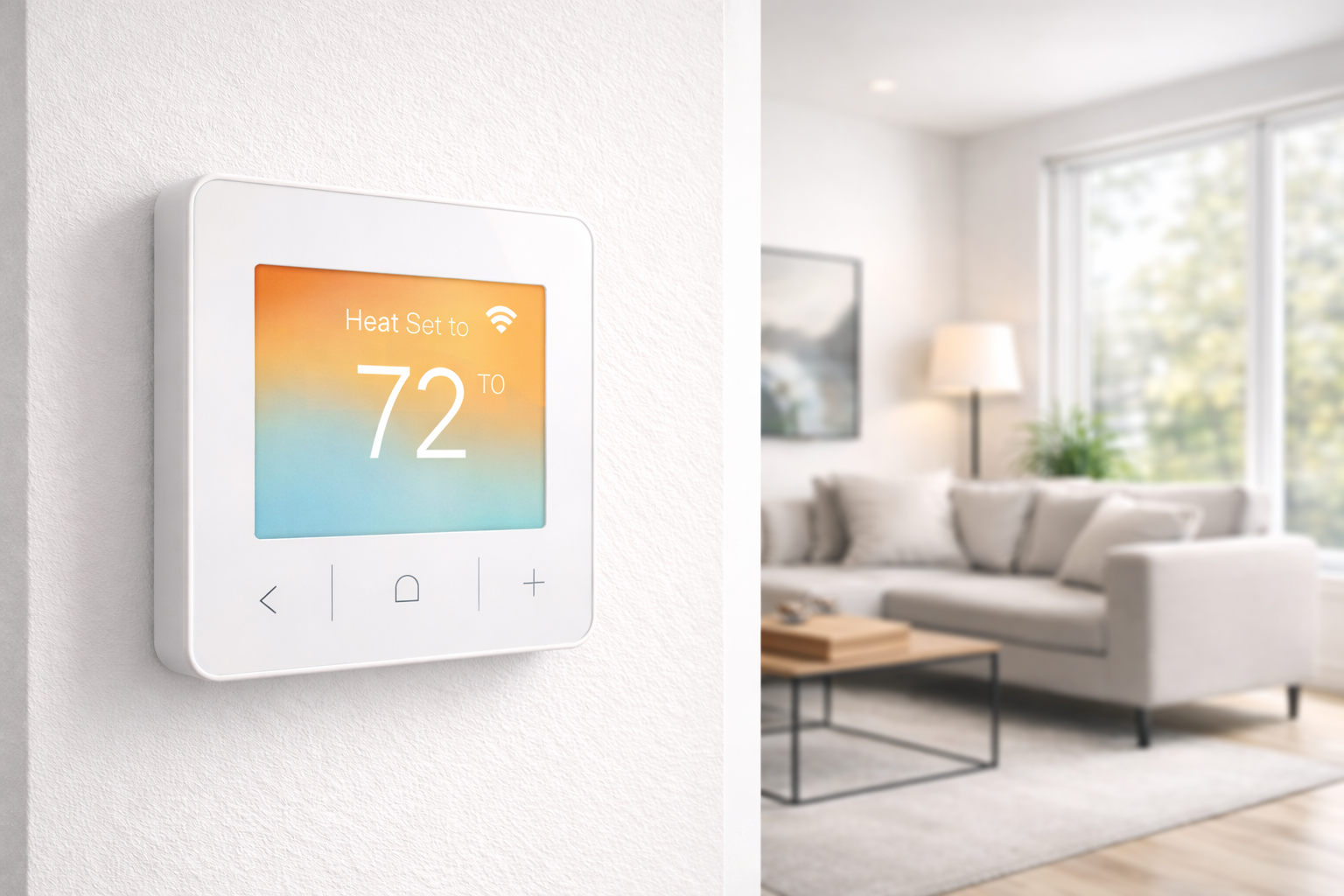
Google Nest Learning Thermostat Review: Key Features
This Nest vs Ecobee smart thermostat comparison highlights how each model performs in real-world use. In this Google Nest Learning Thermostat review, one of the standout features is its ability to learn your schedule automatically.
Auto-Schedule — It Learns So You Don’t Have To
This is the feature that sets the Nest apart. Within the first week it learns your temperature preferences and daily routine, then creates a personalised schedule automatically.
Farsight Display
When the Nest senses you approaching from across the room it lights up and displays the temperature or time — a small detail that users consistently love.
Proven Energy Savings
According to independent studies, the Nest saves an average of:
- 10–12% on heating
- 15% on cooling
Google estimates this equals $131–$145 per year in savings for US households.
According to Google, the Nest Learning Thermostat can help reduce energy usage by learning your schedule and adjusting automatically.
Remote Control From Anywhere
Using the Nest app, you can adjust temperature, monitor usage, and update schedules from anywhere in the world.
Voice Control
Works with Amazon Alexa and Google Assistant for completely hands-free control.
Smart Home Compatible
Easily integrates with most smart home systems, including Google Home and Amazon Echo. In this Google Nest Learning Thermostat review, we found that the device performs best for users who want automation and energy savings.
System Compatibility
The Nest Learning Thermostat works with:
- Gas, electric, forced air systems
- Heat pumps, including auxiliary and emergency heat
- Radiant, oil, hot water systems
- Solar and geothermal
- Humidifiers and dehumidifiers
- 1, 2 and 3-stage heating
- 1 and 2 stage cooling
Google also provides a compatibility checker to confirm your setup before buying. To explore more options beyond these two models, check our guide to the best smart thermostat for home in 2026.
What Real Customers Say
Real-world reviews are where the Nest truly stands out.
One verified US customer described installation as taking just 30 minutes, even with limited technical experience. They also praised customer support for providing step-by-step help and even custom wiring diagrams specific to their setup.
Another user highlighted how voice control made it easier for a family member with vision issues to manage home temperature independently. A genuinely touching example of how smart technology can improve everyday life.
Customers across the US, Canada, and Australia consistently describe the Nest as easy to install, reliable, and a noticeable upgrade to their home.
Pros and Cons
Pros:
- Learns and programs itself automatically
- Saves 10–15% on energy bills
- Works with most heating and cooling systems, including heat pumps
- Compatible with Alexa and Google Assistant
- Premium design with metal finishes
- Remote control via smartphone app
- Energy Star certified
- Excellent 24-hour customer support
- Over 32,000 Amazon reviews with 4.5 stars
Cons:
- Higher upfront cost than basic thermostats
- Requires WiFi for smart features
- May require a C-wire depending on your setup
- Some voice commands take a little getting used to
Check Latest Price on Amazon
How Much Will You Actually Save?
For a typical US household spending $1,500 per year on heating and cooling:
- Heating savings: $90–108 per year
- Cooling savings: $67–75 per year
- Total estimated saving: $157–183 per year
Google’s official estimate based on independent studies: $131–145 per year.
That means the thermostat typically pays for itself in around 2 years — and keeps saving money every year after that.
Installation: How Hard Is It?
If you’re planning to install one yourself, read our step-by-step guide on how to install a smart thermostat safely and correctly.
Most users complete installation in about 30 minutes.
Steps include:
- Removing your existing thermostat
- Connecting your existing wires to the Nest base plate
- Mounting the Nest display
- Following the in-app setup guide
The Nest app guides you step by step throughout, and 24-hour customer support is available if you hit any issues.
The main thing to check beforehand is whether you have a C-wire. If not, you may need a C-wire adapter — check the Nest compatibility tool before purchasing.
Comparison Table
Google Nest Learning Thermostat – £130–£180 – Best automation and design
Honeywell Home T9 – £80–£120 – Best value
Amazon Smart Thermostat – £40–£60 – Best budget option
If you’re using a Bosch system, check out our guide to the best thermostat for Bosch heat pumps – best thermostat for Bosch heat pumps
Frequently Asked Questions
Does the Nest work with heat pumps?
Yes — including multi-stage systems and those with auxiliary and emergency heat.
Does it work without WiFi?
Yes, but you lose app control and smart features until the connection is restored.
How long does installation take? Around 30 minutes for most users. The Nest app guides you through every step.
Is it Energy Star certified?
Yes — it was the first thermostat ever to receive Energy Star certification.
Does it work with Alexa?
Yes — and Google Assistant too.
Is it available in the UK?
Yes — the Google Nest Learning Thermostat is available in both the UK and US and works with most heating systems in both countries.
Overall, this Nest vs Ecobee smart thermostat comparison shows both are excellent choices depending on your needs.
Final Verdict
For most homes, both Nest and Ecobee are excellent choices.
But for multi-room homes with uneven temperatures, Ecobee is the clear winner.
Its built-in room sensors and better temperature balancing make it far more effective at keeping your entire home comfortable, not just the room where the thermostat is installed.
When comparing Nest vs Ecobee multi room homes setups, the biggest difference comes down to how each system handles temperature balancing across different rooms.
⭐ Our Rating: 4.5 out of 5 Based on real customer reviews, product testing, and market research.
For a full breakdown of all major models, see our complete smart thermostat comparison guide to help you make the right choice.
Check Latest Price on Amazon
Reviewed by The Thermo Expert Team
The Thermo Expert Team researches and compares smart thermostats, heating systems, and common HVAC issues to provide clear, practical advice for homeowners. Our goal is to help you understand problems quickly and choose the right solution with confidence.