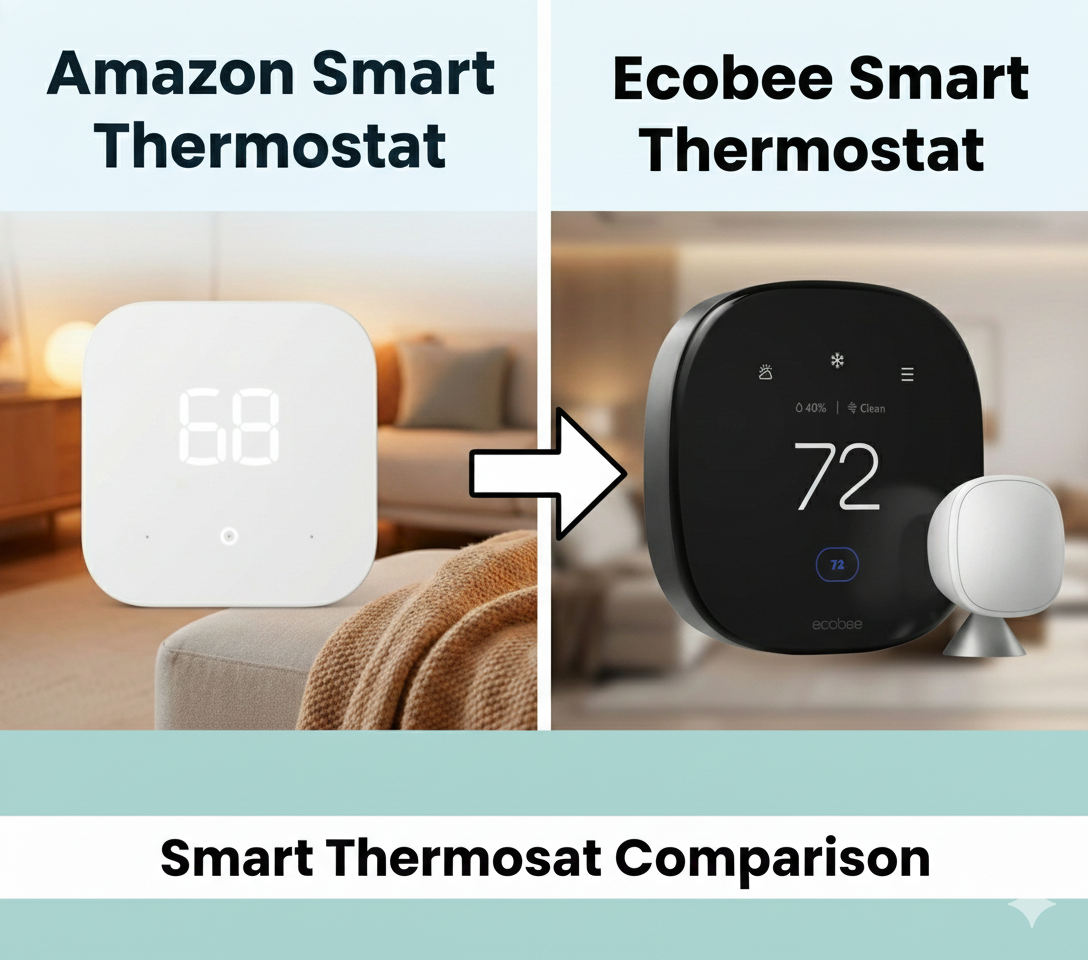
Amazon Smart Thermostat vs. Ecobee: The Battle of Budget vs. Brains
The smart home market has split into two distinct directions: high-end devices packed with sensors and voice assistants, and affordable, utilitarian devices that simply get the job done. This divide is perfectly illustrated in the showdown between the Amazon Smart Thermostat and the Ecobee Smart Thermostat Premium (and its siblings).
On one hand, you have Amazon’s entry into the HVAC space—a device built in partnership with Honeywell Home (Resideo) that costs less than a tank of gas. It promises to bring smart features to the masses using the power of Alexa. On the other hand, Ecobee has long been the gold standard for enthusiasts, offering remote room sensors, advanced air quality monitoring, and Apple HomeKit integration.
So, which one belongs on your wall? Are you paying for features you’ll never use with Ecobee, or is the Amazon thermostat too basic to be truly “smart”? In this comprehensive comparison, we analyze installation, ecosystem compatibility, and whether these devices are truly the best smart thermostat for energy savings in their respective classes.
At a Glance: The Tale of the Tape
Here is the high-level specification breakdown. Note that we are comparing Amazon’s single model against Ecobee’s flagship “Premium” model, though we will also reference the cheaper ecobee3 Lite Smart Thermostat review model where relevant.
| Feature | Amazon Smart Thermostat | Ecobee Smart Thermostat Premium |
|---|---|---|
| Price Tier | Budget ($) | Premium ($$$) |
| Build Quality | Plastic | Zinc & Glass |
| Remote Sensors | No (Not officially supported) | Yes (1 Included, supports up to 32) |
| Voice Assistant | Alexa Compatible (Requires ext. device) | Built-in (Alexa & Siri) |
| C-Wire Required | Yes (Adapter sold separately) | Yes (Adapter included) |
| Smart Home Ecosystem | Alexa Only | HomeKit, Alexa, Google, SmartThings |
| Air Quality Monitor | No | Yes (VOCs & CO2) |
Round 1: Design & Aesthetics
The difference in design philosophy is stark.
Amazon Smart Thermostat: The Minimalist Box
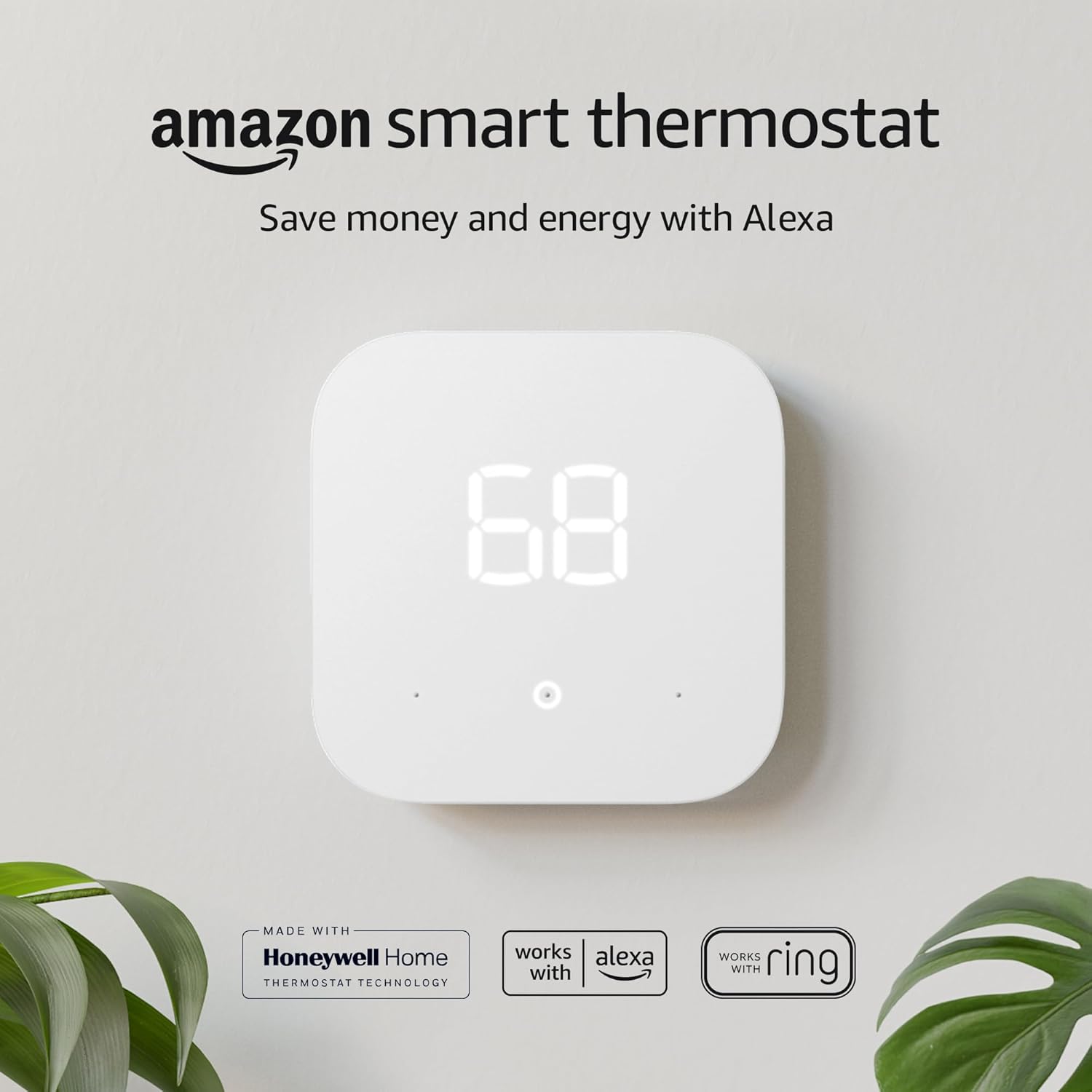
Amazon’s device is a simple, white square with rounded corners. It looks remarkably similar to a sticky note on the wall. The display uses simple LEDs behind the plastic face to show the temperature. It is unobtrusive and clean, designed to blend into a white wall. It feels lightweight and, frankly, a bit cheap—but at its price point, that is expected.
Ecobee: The Tech Statement
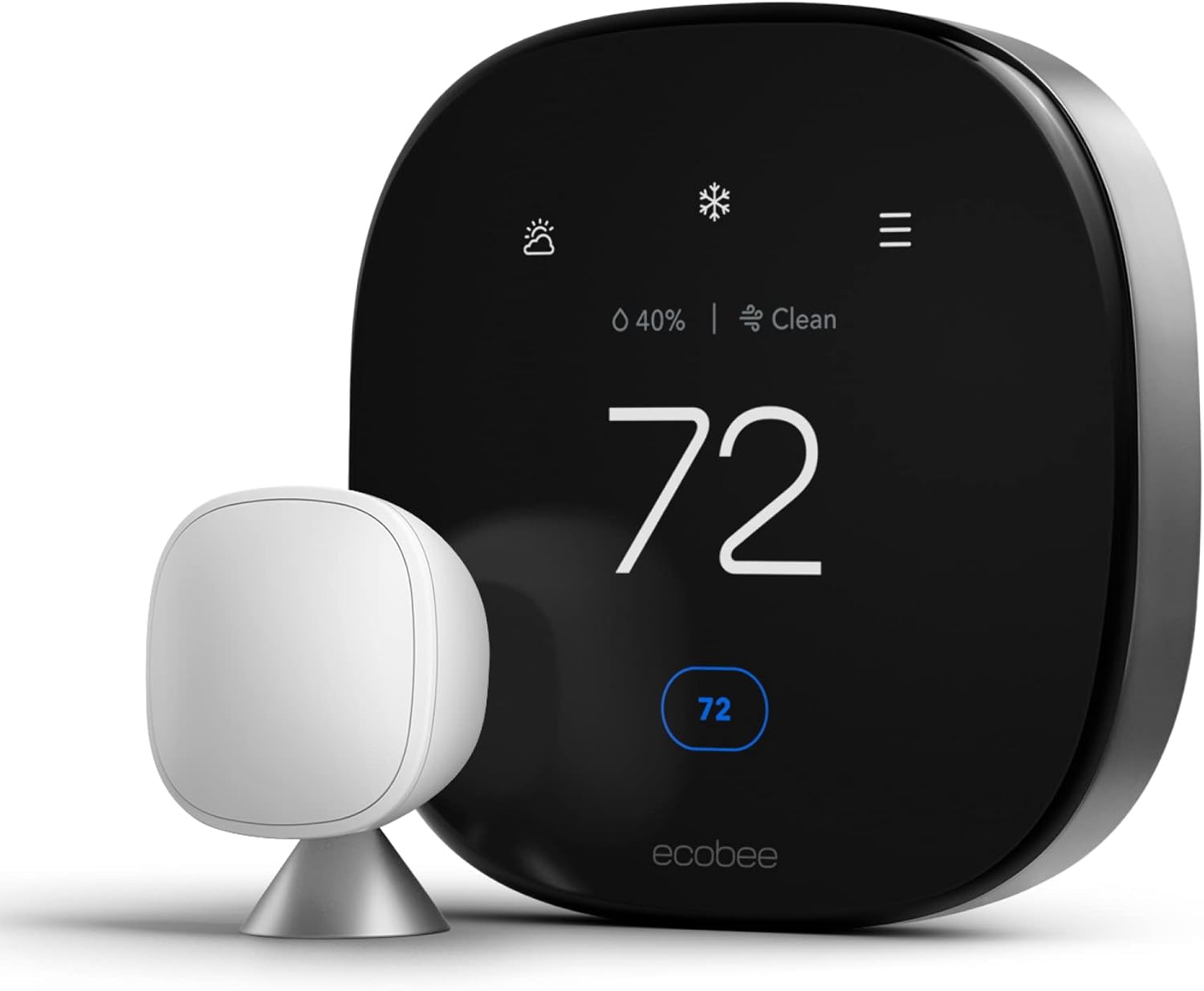
The Ecobee Smart Thermostat Premium is a piece of jewelry for your home. It features a heavy zinc body and a smooth glass touchscreen. The display is a full-color LCD with high resolution. It has a presence. Even the cheaper Ecobee3 Lite feels more substantial than the Amazon unit.
Winner: Ecobee. If you care about interior design and premium materials, Ecobee wins easily.

Round 2: Installation & The “C-Wire” Headache
This is the most critical section for DIYers. A thermostat is only good if you can actually install it.
The Common Wire (C-Wire) Issue
Both devices require a C-wire to provide constant power for their Wi-Fi radios. Older homes often lack this wire.
- Ecobee: Every Ecobee thermostat comes with a Power Extender Kit (PEK) in the box. This small adapter installs at your furnace and repurposes your existing wires to create a C-wire solution. It’s brilliant and saves you from fishing new cables.
- Amazon: The Amazon Smart Thermostat requires a C-wire adapter, but it is sold separately (usually around $15-$20). If you don’t have a C-wire and don’t buy the adapter, the unit will not work.
We have a detailed guide on how to switch out an hz311 thermostat for an ecobee thermostat, which illustrates just how user-friendly Ecobee’s kit is. Amazon’s installation relies on the Alexa app, which is good, but the lack of an included adapter is a hidden cost.
Round 3: Intelligence & Ecosystem
Here is where we answer the question: do smart thermostats really save money?
Amazon’s “Hunches”
The Amazon Smart Thermostat relies heavily on Alexa. It uses a feature called “Alexa Hunches.” Alexa learns your habits based on your interactions with other smart devices (lights, locks, Echo speakers). If Alexa thinks you are asleep or away, it adjusts the thermostat. It’s a clever, passive way to save energy. However, it locks you strictly into the Amazon ecosystem. If you use Google Home or Apple HomeKit, this thermostat is essentially a paperweight. Read our full Amazon Smart Thermostat review for more on this.
Ecobee’s Sensors & Compatibility
Ecobee is the “Swiss Army Knife” of thermostats.
- Remote Sensors: Ecobee includes a SmartSensor (with the Premium) that detects motion and temperature in other rooms. This fixes the classic problem of a thermostat not reaching set temperature in a distant bedroom. Amazon has no official remote sensor support.
- Platform Agnostic: Ecobee works with Apple HomeKit, Google Assistant, Amazon Alexa, SmartThings, and IFTTT. It doesn’t care what phone you use.
- Air Quality: The Premium model monitors VOCs and humidity, alerting you to poor air health.
If you are looking for comparisons like Google Nest vs Amazon Smart Thermostat, you’ll find Amazon sits at the bottom regarding features, while Ecobee sits at the top.
Winner: Ecobee. The cross-platform compatibility and remote sensors make it vastly superior for smart home enthusiasts.Round 4: Price & Value Proposition
This is Amazon’s knockout punch.
The Amazon Smart Thermostat typically retails for under $80, often dipping to $60 on sale. Utility rebates can sometimes bring the cost down to $0. It is incredibly affordable.
The Ecobee Smart Thermostat Premium retails for around $250. Even the cheaper Ecobee3 Lite is usually double the price of the Amazon unit.
The Value Calculation:
If you have a small apartment, live alone, and use Alexa, the Amazon Thermostat is unbeatable value. You don’t need remote sensors for a studio apartment. However, if you have a multi-story home with hot/cold spots, the Ecobee pays for itself by balancing comfort without you needing to crank the HVAC system.
Reliability & Common Issues
Since Amazon partnered with Resideo (Honeywell Home), the HVAC control logic is solid. We rarely see reports where the thermostat says heat on but no heat due to software glitches on the Amazon unit. It’s a simple machine, and simple machines break less often.
Ecobee is also highly reliable, but its complexity introduces more potential points of failure. For example, Wi-Fi dropouts can affect the server connection. However, Ecobee provides excellent diagnostics. If you see thermostat low battery symptoms or power cycling, the Ecobee support articles are extensive.
One minor annoyance with the Amazon unit: the interface is touch-capacitive but can be finicky. Sometimes you have to tap it multiple times to wake it up.
Pros & Cons: Head-to-Head
Amazon Smart Thermostat
Pros
- Incredible price point (often under $60).
- Powered by Honeywell Home reliability.
- Seamless Alexa integration.
- Simple, minimalist aesthetic.
Cons
- No remote sensor support.
- C-wire adapter sold separately.
- Plastic build feels cheap.
- Does not work with Apple HomeKit or Google Home.
Ecobee Smart Thermostat
Pros
- Works with ALL major smart home platforms.
- Remote sensors solve hot/cold spot issues.
- Premium glass and metal build.
- Power Extender Kit (PEK) included.
- Advanced Eco+ energy savings.
Cons
- Significantly more expensive.
- Can be overkill for small apartments.
Frequently Asked Questions
Is Ecobee better than Amazon Smart Thermostat?
Ecobee is objectively “better” in terms of features, compatibility (HomeKit/Google), build quality, and sensor support. However, Amazon Smart Thermostat is a better value for users who only use Alexa and have smaller homes.
Does Amazon Smart Thermostat work with Ecobee sensors?
No. The Amazon Smart Thermostat does not officially support remote temperature sensors. Ecobee sensors are proprietary to Ecobee devices.
Do I need a C-wire for these thermostats?
Yes, both require a C-wire. Ecobee includes a Power Extender Kit (PEK) in the box to create one if you don’t have it. Amazon requires you to buy a separate C-wire adapter.
Can I use Siri with Amazon Smart Thermostat?
No. The Amazon Smart Thermostat is exclusively compatible with Alexa. It does not support Apple HomeKit or Siri. You need an Ecobee for that.
What if my thermostat keeps rebooting after install?
This usually indicates a power issue or a tripped float switch in your condensate line. Check our guide on thermostat keeps rebooting to diagnose the wiring or drainage issue.
Final Verdict: Which Smart Thermostat Wins?
The battle between Amazon Smart Thermostat vs. Ecobee results in a split decision based on your specific needs.
Buy the Amazon Smart Thermostat IF:
- You are on a tight budget.
- You live in a smaller home or apartment (single zone).
- You are already deep into the Alexa ecosystem.
- You don’t care about flashy touchscreens or metal bodies.
Buy the Ecobee Smart Thermostat IF:
- You use Apple HomeKit or Google Home.
- You have a multi-story home with hot/cold spots (needs sensors).
- You want premium build quality.
- You lack a C-wire and don’t want to buy extra adapters.
- You want to monitor air quality (Premium model).
For most homeowners looking for a true “upgrade,” Ecobee is the superior product. But for landlords or budget-conscious buyers, Amazon has created a formidable entry-level contender.
Make Your Choice
Whether you choose budget or premium, stop wasting energy today.
Looking to learn more about the competition? Read our Ecobee vs Honeywell Home comparison or check out our guide on how a smart thermostat saves money in the long run.



 Home
Home
 Info
Info
 Compare
 Reviews
 Shop
Shop