Amazon Smart Thermostat Review: Is the $60 Price Tag Too Good to Be True?

For years, the smart thermostat market was a duopoly between Nest and Ecobee, with entry prices hovering around $200. Then Amazon entered the chat. With a price point often dipping below $60, the Amazon Smart Thermostat promises to democratize energy savings. But does “cheap” mean “compromised”? We tested it to find out.
The Disruptor in the HVAC Space
When Amazon announced its entry into the thermostat market, industry experts were skeptical. Could a tech giant mostly known for shipping boxes really build a reliable piece of HVAC equipment? The answer lies in their partner: Resideo.
Resideo is the parent company of Honeywell Home, a brand with over a century of heating and cooling experience. Essentially, the Amazon Smart Thermostat is a Honeywell thermostat with an Amazon brain. This partnership addresses the biggest concern homeowners have: reliability. If you are wondering Honeywell vs Emerson thermostat reliability, know that this device carries that same Resideo pedigree.
This review explores whether this budget-friendly device is a hidden gem or if you are better off spending extra for the premium features of a Nest or Ecobee.
Design and Build Quality
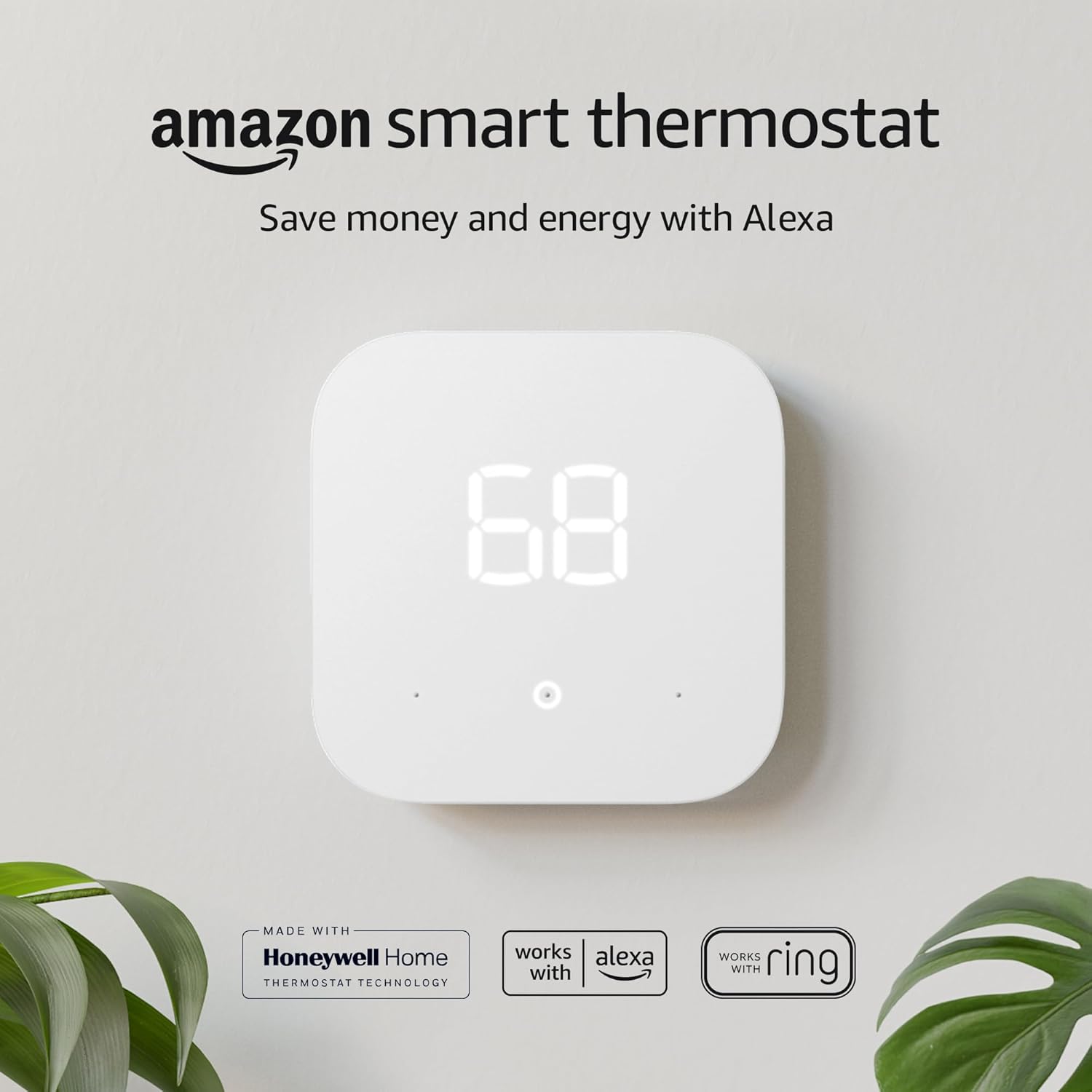
At first glance, the Amazon Smart Thermostat is undeniably minimalist. It features a square, white plastic body with rounded corners, measuring just 3.56 inches on each side. Unlike the Google Nest Learning Thermostat with its rotating metal dial, or the Ecobee with its glass touchscreen, the Amazon unit uses a simple LED display behind a white faceplate.
The controls are capacitive touch buttons on the face of the unit. They are responsive, though they lack the tactile satisfaction of a physical dial. The display shows the current temperature in a soft white glow, which disappears when not in use to blend into your wall.
Is it premium? No. It feels like lightweight plastic. Does it look bad? Also no. It looks clean, modern, and unobtrusive—exactly what many people want.
Current Pricing & Availability
The most affordable Energy Star certified smart thermostat on the market.
Check Price on AmazonInstallation: The C-Wire Hurdle
Here is the most critical part of this review: The Amazon Smart Thermostat requires a C-Wire (Common Wire).
Unlike the Google Nest, which can often “power steal” from your heating wires to charge its internal battery, the Amazon unit needs a dedicated 24V power source. If you pull off your old thermostat faceplate and don’t see a wire connected to the “C” terminal, you have two options:
- Check if there is an unused wire tucked in the wall behind the bundle.
- Install a C-Wire Power Adapter (often sold in a bundle with the thermostat).
The installation process is guided entirely through the Alexa App. The instructions are clear, but if you are uncomfortable with wiring, you might want to review our thermostat instructions for homeowners first. If installed incorrectly without a C-wire, you might find your thermostat keeps rebooting or losing Wi-Fi connection.
Smart Features: It’s All About Alexa
This device doesn’t have its own app; it lives inside the Alexa app. This is both a strength and a weakness. If you already use Alexa for lights and music, it’s seamless. If you don’t, the Alexa app can feel cluttered just to change the temperature.
“Hunches” and Automation
Instead of manual scheduling (which you can still do), Amazon pushes a feature called Alexa Hunches. Alexa learns your habits and “hunches” when you are asleep or away. If it guesses correctly, it adjusts the temperature to save energy.
For example, if you say “Alexa, goodnight” to turn off your lights, the thermostat can automatically lower the heat. This integration is where the device shines. However, compared to geofencing thermostats that strictly use GPS, “Hunches” can sometimes be hit-or-miss until the AI learns your routine.
Energy Dashboard
You get access to an energy dashboard that tracks usage trends. While not as detailed as Ecobee’s “Home IQ,” it answers the fundamental question: Do smart thermostats really save money? Yes, and this dashboard shows you roughly how many hours your system ran compared to previous weeks.
Performance Evaluation
We tested the unit for two weeks in a single-zone home. Here is the breakdown:
- Temperature Accuracy: Spot on. It matched our reference thermometer perfectly, likely due to the Resideo hardware inside.
- Connectivity: Are WiFi thermostats worth it if they drop connection? We experienced zero dropouts, provided the C-wire was secure.
- Voice Control: “Alexa, set the temperature to 72” worked instantly every time. Note that the thermostat does not have a microphone. You need a separate Echo device nearby to give voice commands.
One limitation is the lack of support for specialized HVAC accessories. If you need a thermostat for baseboard heaters (high voltage), this is NOT the device for you. It is strictly for 24V central HVAC systems.
Comparison: Amazon vs. The Giants
How does a $60 device stack up against $200 competitors?
| Feature | Amazon Smart Thermostat | Google Nest Thermostat | Ecobee Lite |
|---|---|---|---|
| Price | ~$60 – $80 | ~$130 | ~$150 |
| C-Wire Required | Yes (Strict) | No (Mostly) | Yes (Adapter included) |
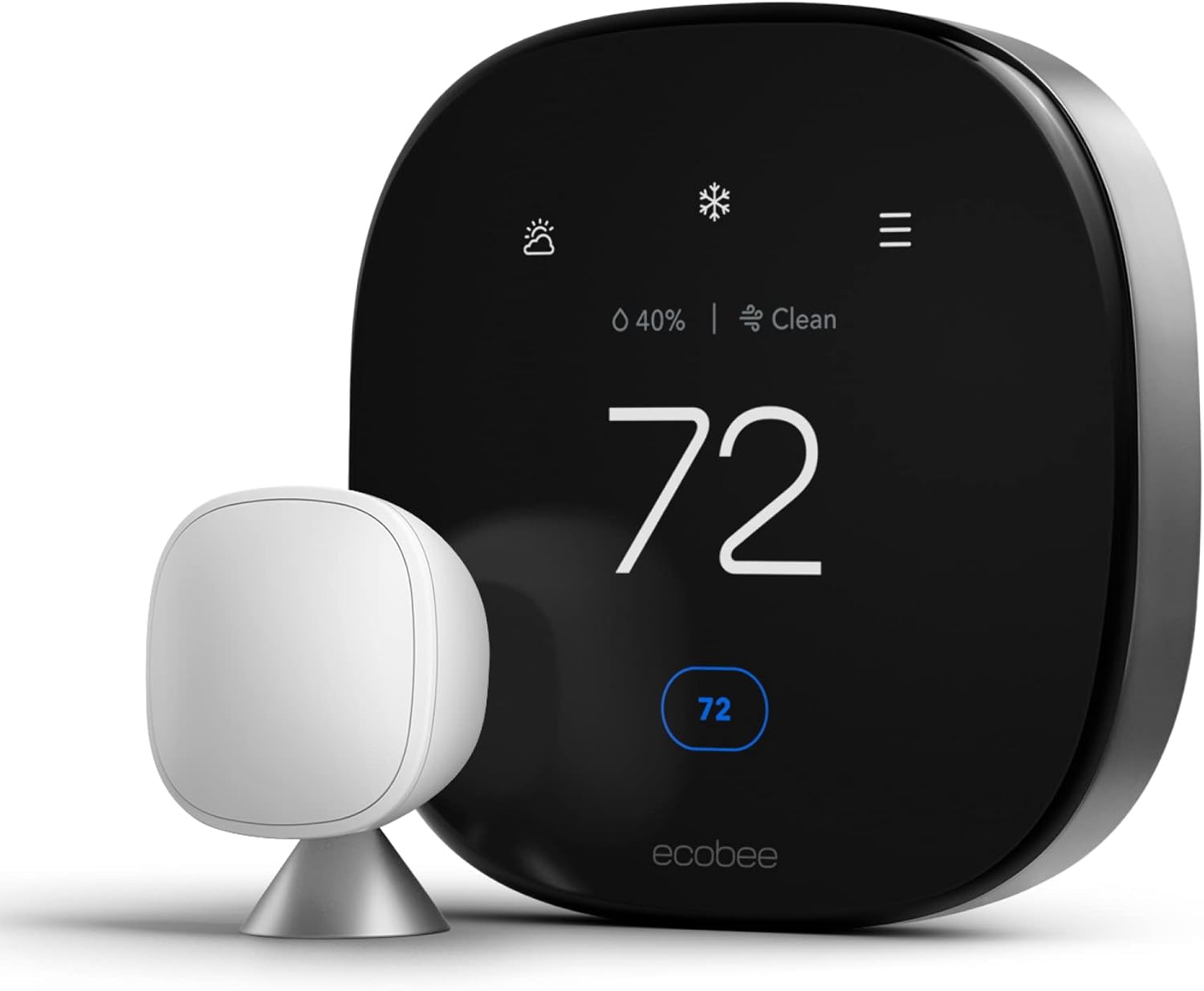
| Room Sensors | No (Uses Echo devices) | Separately Sold | Separately Sold |
| Voice Assistant | Alexa Only | Google / Alexa / Matter | Apple / Alexa / Google |
| Learning | Alexa “Hunches” | Auto-Schedule | Smart Recovery |
If you are torn between ecosystems, check out our detailed head-to-head: Google Nest vs Amazon Smart Thermostat.
Pros & Cons
✅ The Good
- Incredible Value: Unbeatable price for the features.
- Reliability: Backed by Honeywell Home / Resideo hardware.
- Simple Interface: Easy for guests and family to use.
- Energy Star Certified: Eligible for utility rebates.
❌ The Bad
- Requires C-Wire: Installation can be tricky for older homes.
- Alexa Only: No Google Home or Apple HomeKit support.
- No Remote Sensors: Cannot balance hot/cold spots like Ecobee.
- Basic Aesthetic: Looks a bit like a generic controller.
Don’t Forget the C-Wire Adapter

If your home was built before 1980, you likely need this adapter to power the thermostat.
Check Adapter PriceCommon Issues to Watch For
Even the best devices have quirks. Here are common issues users face with the Amazon Smart Thermostat:
- Short Cycling: If the C-wire connection is loose, the thermostat might reboot, causing the furnace to cycle. Read thermostat keeps rebooting for fixes.
- Heat Not Turning On: During setup, you must correctly identify your system type (Gas vs. Heat Pump). If set incorrectly, you might see thermostat says heat on but no heat.
- Sensing Issues: Since it lacks dedicated sensors, it measures temperature only at the hallway (or wherever installed). If your bedroom is cold, consider checking our guide on thermostat not reaching set temperature to troubleshoot airflow issues.
Frequently Asked Questions
Can I install the Amazon Smart Thermostat myself?
Yes, most users can install it in under 45 minutes. The Alexa app provides a step-by-step video guide tailored to your specific wiring.
Is there a battery in the Amazon Smart Thermostat?
No, there are no user-replaceable batteries. It runs entirely on power from your HVAC system. If you need a battery option, check out the best battery operated thermostats.
Does it work with “dumb” heaters?
It works with most standard 24V central heating and cooling systems. It does NOT work with high-voltage baseboard heaters. For those, you need a brand like Mysa. Read our Mysa Smart Thermostat review for more info.
Can I control it when I am not home?
Yes, as long as the thermostat is connected to Wi-Fi, you can control it from anywhere in the world using the Alexa app on your phone.




 Home
Home
 Info
Info
 Compare
 Reviews
 Shop
Shop