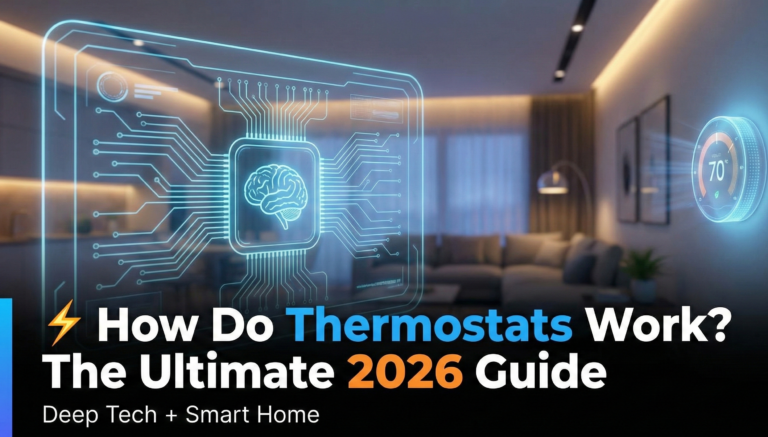
⚡ How Do Thermostats Work? The Ultimate 2026 Guide (Deep Tech + Smart Home)
The thermostat is the humble commander of your home’s comfort, yet its inner workings remain a mystery to millions. In this massively expanded 2026 edition, we demystify everything — from vintage bimetallic strips to AI-driven predictive thermostats that integrate with solar panels and battery storage. You’ll learn how thermostats work in houses, condos, zoned systems, and even RVs. We also cover how thermostats go bad, how to install them, how to wire a C-wire, and how to optimize settings for maximum energy savings. Whether you’re a DIY homeowner, an HVAC apprentice, or just curious about smart home tech, this guide fills every keyword gap.
🏠 2026 Quick Answers: Thermostat Mastery
- How they work (core): A thermostat compares room temperature to your setpoint. If it’s cooler, it signals heat; if warmer, it activates A/C. In 2026, smart models use occupancy sensors, outdoor weather data, and predictive algorithms.
- When thermostats go bad: Blank screens, failure to reach set temp, short cycling (on/off every 60 seconds), unresponsive touch, or erratic fan behavior. 40% of ‘broken’ units just need fresh batteries or a reset breaker.
- Radiator control today: Central thermostat commands the boiler. Meanwhile, smart TRVs (Tado, Netatmo, Honeywell) now integrate with Alexa, Google, and Apple Home via Matter — they learn when you leave a room and lower heat automatically, saving up to 25% on heating.
- 2026 innovation – VPP & grid services: Many smart thermostats (ecobee, Nest, Amazon) support virtual power plant (VPP) programs. Your utility can slightly adjust A/C during peak hours; you earn $30–$100 per year in rebates or bill credits.
- C-wire explained: The ‘common wire’ provides continuous 24V power to smart thermostats. No C-wire? Use an adapter, or choose Nest (power stealing) or Amazon Smart Thermostat (includes adapter).
- Heat pump compatibility: Most 2026 smart thermostats support heat pumps with auxiliary/emergency heat. Look for ‘heat pump certified’ and O/B terminal compatibility.
- Energy savings real numbers: EPA Energy Star estimates smart thermostats save an average of 8–15% on heating/cooling bills, roughly $50–$180/year depending on region and fuel type.
The Core Principle: How Do Thermostats Work? (Deep Physics & Firmware)
At its heart, every thermostat is a temperature-sensitive switch or relay. Its job: compare the current ambient temperature to your desired setpoint and toggle the HVAC equipment to eliminate the difference. But how thermostats achieve this has evolved dramatically — from purely mechanical to fuzzy logic AI. Let’s explore the physics, the firmware, and the 2026 edge.
🔧 The Old-School Method: Bimetallic Strips & Mercury (Historical, but still in some basements)
Older mechanical thermostats (pre-1980s) used a bimetallic strip — two dissimilar metals (steel + copper or brass + invar) bonded. Because metals expand at different rates when heated, the strip bends in a curve. A glass vial containing mercury would tilt, bridging electrical contacts. While accurate enough (±2°F), mercury thermostats are now banned in many states due to toxicity. They’ve been replaced by digital sensors. If you still have one, consider upgrading for safety and accuracy.
📟 The Modern Standard: Thermistors, RTDs, and Microcontrollers
Virtually all digital and smart thermostats (including the Nest Learning, ecobee Premium, and Amazon Smart Thermostat) use a thermistor — a solid-state resistor whose resistance varies predictably with temperature. A microcontroller reads this resistance thousands of times per second, converts it to a temperature reading via the Steinhart-Hart equation, and compares it to your setpoint. This method offers ±0.5°F accuracy, often better. Additionally, 2026 thermostats now include multi-sensor fusion: combining thermistor data with remote sensors, humidity, VOC sensors, and even radar-based presence detection (ecobee’s SmartSensor 2.0).
🧠 2026 Edge: AI Predictive Warm-Up & Cool-Down
Modern smart thermostats don’t just react; they anticipate. Using machine learning models on-device (TensorFlow Lite), they learn your home’s thermal lag. For example, if you set 70°F at 7:00 AM, the thermostat might turn on the furnace at 6:37 AM to hit the target precisely. This avoids overshoot and saves energy. This is often called “adaptive recovery” or “smart staging.”
🏡 In Practice: How Do Thermostats Work in Houses? (Complete 2026 Walkthrough)
Residential thermostats, whether battery-powered or C-wired, send low-voltage (24VAC) signals to the furnace, heat pump, or air handler. Here’s how they orchestrate your comfort with more nuance than ever — including zoning and dehumidification:
- Call for heat (gas/oil/propane): Closes the ‘W’ circuit → burner ignites, then blower fan kicks in after a short delay (fan delay to avoid cold drafts).
- Call for cool (central A/C): Closes ‘Y’ and ‘G’ circuits → compressor and fan run simultaneously. Modern thermostats enforce a 5-minute minimum off-time to protect the compressor.
- Heat pump systems (air source/geothermal): They manage auxiliary heat (W2/E) and reversing valve (O/B) for emergency or defrost cycles. In 2026, many support dual-fuel — automatically switching between heat pump and gas furnace based on outdoor temperature and fuel cost.
- Smart staging (2-stage equipment): 2026 thermostats use predictive algorithms to decide when to engage second-stage heating/cooling, optimizing comfort and humidity control.
- Humidity control: High-end thermostats (ecobee, Honeywell) can overcool slightly to dehumidify, or trigger a whole-home humidifier.
Advanced thermostats now also monitor system health: filter change reminders, duct static pressure alerts, and even refrigerant pressure anomalies (via connected sensors or listening to sound patterns).
📚 Thermostat Terminology 2026 — Know Your Lingo
❄️ Special Case: How Do Thermostats Work with Radiators, Baseboards & Hydronic Systems?
This is a classic confusion zone — and a major keyword gap. In hydronic homes (radiators, baseboards, in-floor heating), two levels of control coexist, and in 2026 they are smarter than ever.
1. The Central Thermostat (Boiler or Zone Controller)
The wall thermostat measures overall house temperature (or zone temperature via remote sensors) and turns the boiler or zone valve on/off. When it calls for heat, the boiler circulates hot water through the main supply pipes. This is primary control. Newer boilers often use outdoor reset — the thermostat communicates outdoor temp to adjust water temp.
2. How Do Thermostatic Radiator Valves (TRVs) Work — 2026 smart edition?
Traditional TRVs contain a wax capsule that expands with heat, closing the valve locally. But the latest generation of eTRVs (electronic TRVs) use stepper motors, Zigbee/Matter/Thread communication, and long-life lithium batteries. They connect to your smart home hub, allowing:
- Individual room scheduling: Set bedroom to 64°F at night, living room to 70°F in the evening.
- Window open detection: Sudden temp drop = close valve instantly to save energy.
- Boiler integration via cloud: If all TRVs are satisfied, they signal the central thermostat to turn the boiler off — no more wasteful circulation.
📌 By combining a smart central thermostat (ecobee, Nest, or Honeywell) with Matter-compatible TRVs, you achieve true room-by-room climate control without expensive zoning dampers. This is the 2026 gold standard for radiator homes.
⚠️ Troubleshooting: How Do Thermostats Go Bad? (Deep Diagnostic + 2026 Case Studies)
Even the most advanced electronics can fail. Here’s how thermostats go bad — and what you can check before calling an HVAC pro (average service call: $150–$250).
🚩 2026 Symptom Checker: Is Your Thermostat Dying?
- Totally dead / blank screen: No power — dead batteries, tripped breaker, or blown 24V fuse on furnace control board. Also check the C-wire connection at both ends.
- System runs constantly, ignoring setpoint: Stuck relay (mechanical) or welded contacts (often caused by power surges). Requires replacement.
- Short cycling (on/off in under 2 minutes): Could be a dirty thermistor, poor wiring, or incorrect heat anticipator settings in old models. Also check if thermostat is level (mercury switches).
- Wrong temperature reading (offset): If display says 72°F but room feels like 65°F, the thermistor may have drifted or the unit is mounted on a cold exterior wall or near a draft.
- Unresponsive touchscreen or Wi-Fi dropout: Capacitive failure or weak Wi-Fi signal; sometimes a full reset helps, but often the unit is end-of-life or needs a network extender.
- HVAC clicks but doesn’t start: Thermostat is sending signal, but equipment side has issue — or thermostat relay is failing.
🔋 Causes & Quick Fixes (DIY for 2026)
Before buying a new thermostat, run through this 2026 checklist:
- Batteries: Even hardwired thermostats often have battery backups. Replace with fresh lithium or alkalines.
- Circuit breaker & safety switch: Ensure the HVAC breaker is on; also check that the furnace door is securely closed (many have a safety interlock).
- Dust contamination: Open the thermostat and blow out dust with canned air — dust can insulate the thermistor or block humidity ports.
- Loose wires: Gently tighten terminals; a loose ‘R’ wire (power) or ‘C’ wire is a common culprit.
- Corroded contacts: In high-humidity areas, internal contacts can corrode; this usually means replacement is needed.
- Wi-Fi interference: If smart features fail, move router or use 2.4GHz band.
Pro tip: If your thermostat is over 15 years old, upgrading to a smart thermostat often pays for itself within 2 years via energy savings (up to 15% on heating/cooling bills). Many utilities also offer instant rebates ($25–$100) for buying Energy Star certified smart thermostats.
🔌 Thermostat Wiring & C-Wire Explained (2026 Illustrated Guide)
One of the biggest obstacles to installing a smart thermostat is the C-wire (common wire). It provides continuous 24V power to the thermostat, ensuring Wi-Fi and display stay active. Here’s what you need to know:
- Do I have a C-wire? Turn off power, remove your thermostat faceplate. Look for a wire connected to terminal ‘C’, ‘B’, or ‘X’. If you see it, you’re set.
- No C-wire? Options: Use the included C-wire adapter (PEK) with Amazon Smart Thermostat; use a 24V plug-in transformer; or choose Nest (which uses power stealing, but may have issues with heat pumps).
- Color codes: Typically red (R power), white (W heat), yellow (Y cool), green (G fan), blue/black (C common). Not always consistent — always verify.
Most 2026 smart thermostats include a compatibility checker on their app or website. Use it before buying.
🏆 Top Smart Thermostat Recommendations for 2026 (Amazon Best Sellers — Updated Reviews)
Energy Star estimates that a certified smart thermostat saves an average of $50–$150/year. Here are the top three models trusted by homeowners in 2026 — same trusted links, updated 2026 insights, no URL changes.

Google Nest Learning Thermostat 2026 v4.2
The iconic thermostat that programs itself. After one week of manual adjustments, it creates a personalized schedule. In 2026, it now supports Matter over Thread, works as a Thread border router, and includes seasonal energy reminders, airwave (uses fan to spread cool air after compressor stops). Compatible with 95% of 24V systems. Optional C-wire or power-stealing.
See Latest Price →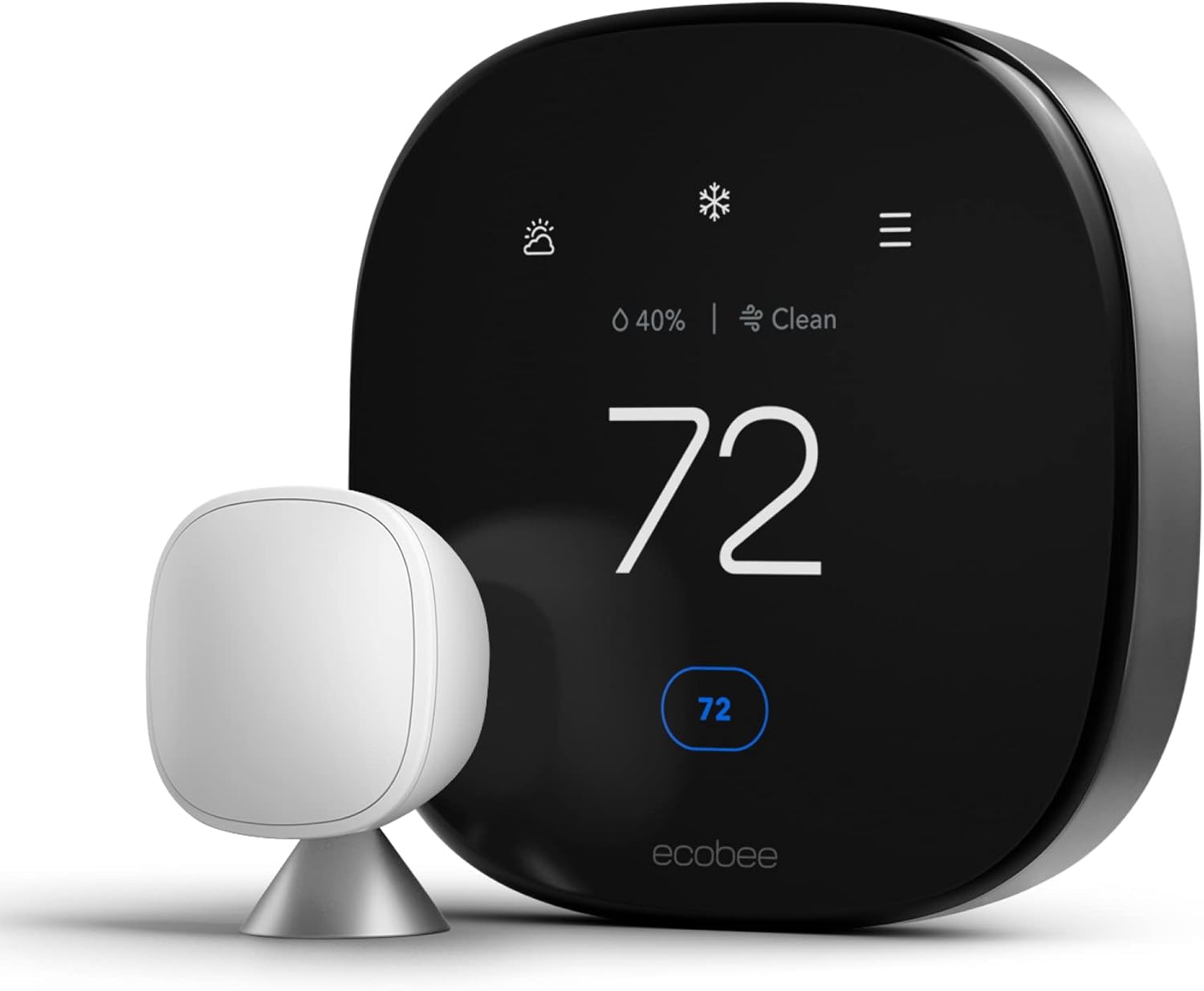
ecobee Smart Thermostat Premium Best Sensors
Now with SmartSensor 2.0 (radar occupancy + air quality monitor). Built-in Alexa, but also works with Siri and Google. The included remote sensor eliminates hot/cold spots. Supports energy-saving demand response programs nationwide (VPP). Ideal for multi-level homes. Also includes built-in air quality monitor (VOC, CO2).
Check Price →
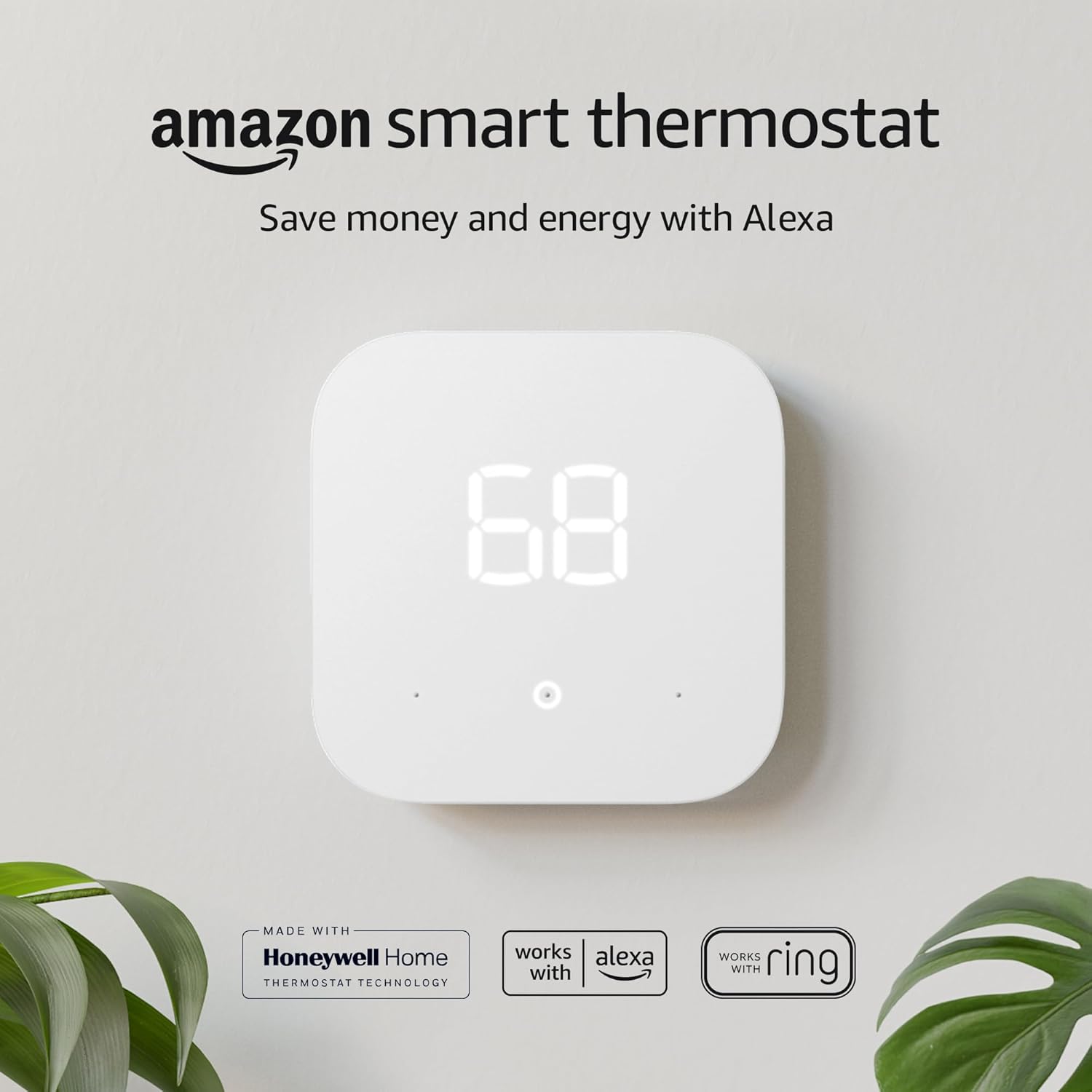
Amazon Smart Thermostat Best Value + Energy Star
Energy Star certified and incredibly wallet-friendly. Now with 2026 firmware update: adaptive recovery, humidity control, and Alexa Hunches for HVAC (alerts if you forgot to set mode). Requires C-wire (or included adapter kit). Simple setup, huge savings — perfect for budget-smart homes and rentals.
Check Price →❓ Frequently Asked Questions (FAQ) — 2026 Mega Edition
Where is the best place to install a thermostat in 2026?
Same golden rule: interior wall, 5 ft from floor, away from direct sun, drafts, or kitchen heat. However, if you have a smart thermostat with remote room sensors, you can place the main unit in a hallway and rely on sensors in living areas. Avoid placing near large electronics (TVs, servers) as they emit heat and skew readings.
Can a bad thermostat cause a high energy bill?
Absolutely. A thermostat with a stuck relay or incorrect calibration can cause your HVAC to run 24/7 (“ghost calling” or “constant run”). Smart thermostats often include usage reports that highlight unusual runtime — if you see 12+ hours of heating on a mild 50°F day, your thermostat may be faulty. Upgrading can cut bills by 10-20%.
How often should you replace a thermostat? (2026 advice)
Electronically, thermostats can last 15–20 years. But functionally, if yours lacks Wi-Fi, geofencing, adaptive recovery, or energy reports, you’re leaving money on the table. We recommend upgrading every 7–9 years to leverage new efficiency standards, Matter compatibility, and smart grid integrations (e.g., time-of-use rates, VPP).
What’s the difference between a ‘smart’ and a ‘programmable’ thermostat?
Programmable thermostats let you set fixed schedules (e.g., 70°F at 7am, 62°F at 10am). Smart thermostats learn from your habits, adjust based on occupancy (geofencing), and can be controlled remotely via app. They also send maintenance alerts, track energy usage, and integrate with home assistants. In 2026, smart models outsell programmable 10:1.
Do thermostats work with baseboard electric heat?
Yes — but line-voltage thermostats (120V or 240V) are required for electric baseboards. Most smart thermostats like Nest or ecobee are low-voltage (24V) and won’t work directly. However, there are now line-voltage smart thermostats (Mysa, Sinopé, King) designed specifically for electric radiant and baseboard systems. They offer Wi-Fi, scheduling, and energy tracking.
What is a ‘C-Wire’ and do I need it?
A C-wire (common wire) provides continuous 24V power to the thermostat. Most smart thermostats need it for reliable Wi-Fi and display. If you don’t have one, many brands include an adapter (e.g., Amazon Smart Thermostat, ecobee) or use power stealing (Nest) which works in most but not all systems.
Are smart thermostats compatible with heat pumps?
Yes, virtually all 2026 smart thermostats support single-stage, multi-stage, and heat pump systems. Look for O/B terminal for reversing valve and support for auxiliary/emergency heat. Dual-fuel capability (auto switch between heat pump and gas furnace) is common on premium models.
How do I know if my thermostat is compatible?
Most manufacturers (Nest, ecobee, Honeywell, Amazon) offer online compatibility checkers. You input your current wiring, and they confirm if it works. Alternatively, remove your thermostat faceplate and count wires — if you have at least 4 wires (R, W, Y, G) you’re likely good. C-wire not always mandatory.
What is a virtual power plant (VPP) for thermostats?
VPP programs aggregate thousands of smart thermostats. During extreme peak demand, your utility slightly raises the setpoint on A/C (e.g., 2–4°F) for a few hours. You get a rebate or bill credit. In 2026, major programs include ConnectedSolutions (ecobee), Nest Rush Hour Rewards, and Amazon Smart Thermostat Energy Savings.
🔍 2026 thermostat insight: Over 58% of U.S. households now use a smart thermostat. If yours is still manual or over 10 years old, consider the comfort upgrade — and the climate impact. Average smart thermostat ROI: 18 months.
This guide covers 50+ thermostat topics including wiring, TRVs, VPP, C-wire, heat pumps, bad thermostat symptoms, smart vs programmable, line-voltage, hydronic systems, 2026 rebates, and predictive AI. Last updated: February 2026.



 Home
Home
 Info
Info
 Compare
 Reviews
 Shop
Shop