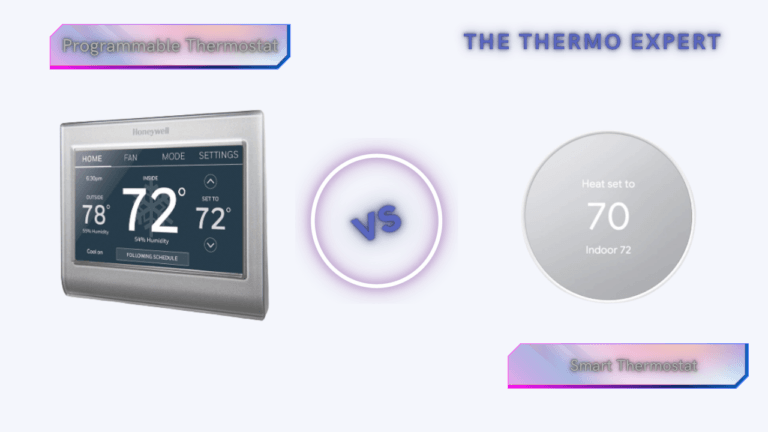
Smart vs. Programmable Thermostats: The 2026 Guide
Deciding between cost-effective scheduling and AI-driven automation for your home energy management.
Directly affecting energy consumption, cost savings, and comfort levels, the thermostat is the undisputed control center of the heating and cooling system in your house. Historically, manual thermostats—those beige dials of yesteryear—have been ineffective in energy management as they required constant, vigilant manual adjustments. However, rapid developments in residential HVAC technology have offered homeowners two sensible, modern choices: smart thermostats and programmable thermostats.
In the landscape of 2026, where energy prices have fluctuated and grid sustainability is a global priority, the choice between these two devices is more significant than ever. Programmable thermostats offer a “set it and forget it” schedule based on your input, while smart thermostats utilize Artificial Intelligence (AI) and machine learning to predict your needs before you even realize them. Both offer clear benefits over manual equivalents, particularly regarding automation and energy economy. But which offers the best return on investment for your specific lifestyle?
To enable you to decide with knowledge, this comprehensive guide investigates the main variations, advantages, and possible disadvantages of both thermostat kinds, updated with the latest industry standards for 2026.
Understanding Programmable Thermostats
What is a Programmable Thermostat?
A programmable thermostat is a digital device that allows users to pre-set temperature regimens for different times of the day and week. Unlike “smart” devices, these do not connect to the internet, do not have apps, and do not “learn.” They are logic-based switches. These devices improve energy efficiency by automating temperature changes based strictly on a schedule you define.
Typically, these thermostats offer three main types of scheduling models:
- 7-Day Programming: Allows a unique schedule for every single day of the week. Best for people with erratic schedules.
- 5-1-1 Programming: One schedule for the weekdays (Mon-Fri) and separate schedules for Saturday and Sunday.
- 5-2 Programming: One schedule for weekdays and one shared schedule for the weekend.
Correct usage involves setting “setback” periods—for example, lowering the heat by 8 degrees while you are at work. According to the Department of Energy, proper setback strategies can save up to 10-20% on energy costs annually. However, the caveat is human behavior; many users find the interfaces clunky and end up using the “Permanent Hold” feature, effectively turning it back into a manual thermostat and negating all savings.
Benefits of Programmable Thermostats
- Cost-Effective: They are significantly more affordable upfront, often costing between $20 and $80.
- No Privacy Concerns: Since they do not connect to the cloud, there is no data tracking, no risk of hacking, and no sharing of your data with tech giants.
- Reliability: They do not depend on Wi-Fi. If your internet goes down or your router fails, your heating schedule continues uninterrupted.
- Battery Efficiency: Many models run for years on AA batteries without needing a “C-wire” (Common wire) for power.
Limitations
- Rigidity: If you come home early from work, the house will be cold unless you manually override it.
- User Interface: Programming them often involves pressing tiny rubber buttons in complex sequences, which deters users from optimizing schedules.
- No Remote Access: You cannot adjust the temperature from bed or while on vacation.
Understanding Smart Thermostats
What is a Smart Thermostat?
Smart thermostats represent the pinnacle of home automation. They learn household habits, dynamically change temperatures using algorithms, and provide remote control via Wi-Fi-enabled applications. In 2026, these devices have evolved to support the Matter smart home standard, allowing them to communicate seamlessly with Apple, Google, Amazon, and Samsung ecosystems without compatibility headaches.
The defining feature of a smart thermostat is Contextual Awareness. Through a combination of motion sensors (occupancy detection), Geofencing (tracking your phone’s GPS location), and local weather data, the thermostat knows exactly when to heat or cool your home. It doesn’t just run a schedule; it adapts to reality.
Key Features in 2026
- AI-Driven Learning: The device notes that you consistently turn the heat down at 10 PM and begins to automate that process after a few days.
- Remote Access: Control your climate from anywhere in the world. Forgot to turn the AC off before your flight? Do it from the airport.
- Energy Grid Integration: Many modern smart thermostats can participate in “Demand Response” programs, where utility companies offer credits for slightly adjusting your temperature during peak grid usage hours.
- HVAC Health Monitoring: These devices can detect anomalies in your system, such as a failing compressor or a clogged filter, and alert you before the system breaks down completely.
Benefits of Smart Thermostats
- Maximum Efficiency: By strictly heating/cooling only when necessary (and utilizing Eco modes when you leave), savings often exceed those of programmable units.
- Convenience: Voice control integration (“Hey Google, set temperature to 72”) is a game-changer for accessibility and ease of use.
- Data Insights: Monthly “Energy Reports” gamify savings, showing you exactly how many hours your system ran and where you can improve.
Limitations
- High Upfront Cost: Prices range from $130 to over $300.
- Connectivity Dependency: While they still function as basic thermostats without Wi-Fi, they lose 90% of their value (remote access, smart features) if the internet cuts out.
- Installation Complexity: Most require a C-wire to provide constant power for the Wi-Fi radio and display, which can complicate installation in older homes.
Comparison: Smart vs. Programmable
| Feature | Programmable Thermostat | Smart Thermostat |
|---|---|---|
| Primary Function | Runs a rigid, pre-set time schedule. | Adapts automatically to behavior & location. |
| Remote Access | No (requires physical interaction). | Yes (via Smartphone/Web). |
| Learning Ability | None. | High (AI & Pattern Recognition). |
| Installation | Easy (Battery powered usually). | Moderate (Often requires C-Wire). |
| Price Range | $20 – $80 | $100 – $350+ |
| Energy Savings | ~10-15% (Dependent on user diligence). | ~15-23% (Automated/Passive). |
| Privacy | High (Local only). | Moderate (Data stored in cloud). |
Which One Is Right for You?
Choose a Programmable Thermostat If:
- You have a highly predictable routine: If you leave at 8 AM and return at 6 PM every single day without fail, a rigid schedule works perfectly fine.
- You are on a strict budget: The ROI (Return on Investment) takes longer with a $250 smart thermostat than with a $30 programmable one.
- You prioritize privacy: If you are uncomfortable with Google or Amazon having data on your home occupancy, the “dumb” device is the superior choice.
- You live in a rental: You may not want to invest in expensive hardware or mess with wiring in a temporary home.
Choose a Smart Thermostat If:
- Your schedule is erratic: If you work freelance, travel often, or have kids with varying activity times, geofencing is the only way to save energy effectively.
- You want “Peace of Mind”: The ability to check your home’s temperature while on vacation to ensure pipes haven’t frozen is invaluable.
- You love data: If you want to track your carbon footprint and see granular usage statistics.
- You have a multi-zone home: Smart thermostats with remote room sensors (like Ecobee) can solve hot/cold spots in a house much better than a central programmable unit.
Installation & Compatibility: The “C-Wire” Issue
Before purchasing, compatibility is the biggest hurdle. The most common issue is the “C-Wire” (Common Wire). Old thermostats only needed wires to toggle the heat (R and W). Smart thermostats act as computers; they need a constant stream of 24V electricity to power their color touchscreens and Wi-Fi radios. The C-wire provides this return path for electricity.
How to Check:
- Turn off power to your HVAC system at the breaker.
- Pop the faceplate off your current thermostat.
- Look at the wires connected to the terminals. If you see a wire connected to the “C” terminal, you are good to go.
- If there is no C-wire, check if there is an unused wire tucked into the wall bundle.
No C-Wire? No Problem. In 2026, most major brands offer “Power Extender Kits” (PEK) included in the box. These small adapters install at your furnace control board and allow you to repurpose existing wires to carry power. Alternatively, plug-in adapters are available. Note: While some thermostats claim to work without a C-wire via “power stealing,” HVAC professionals generally advise against this as it can cause weird behavior in sensitive modern furnaces.
2026 Top Picks

Google Nest Learning Thermostat (Gen 4)
The king of aesthetics and algorithms. Best for those who want zero hassle. It learns your life so you never have to touch it.
Check Price
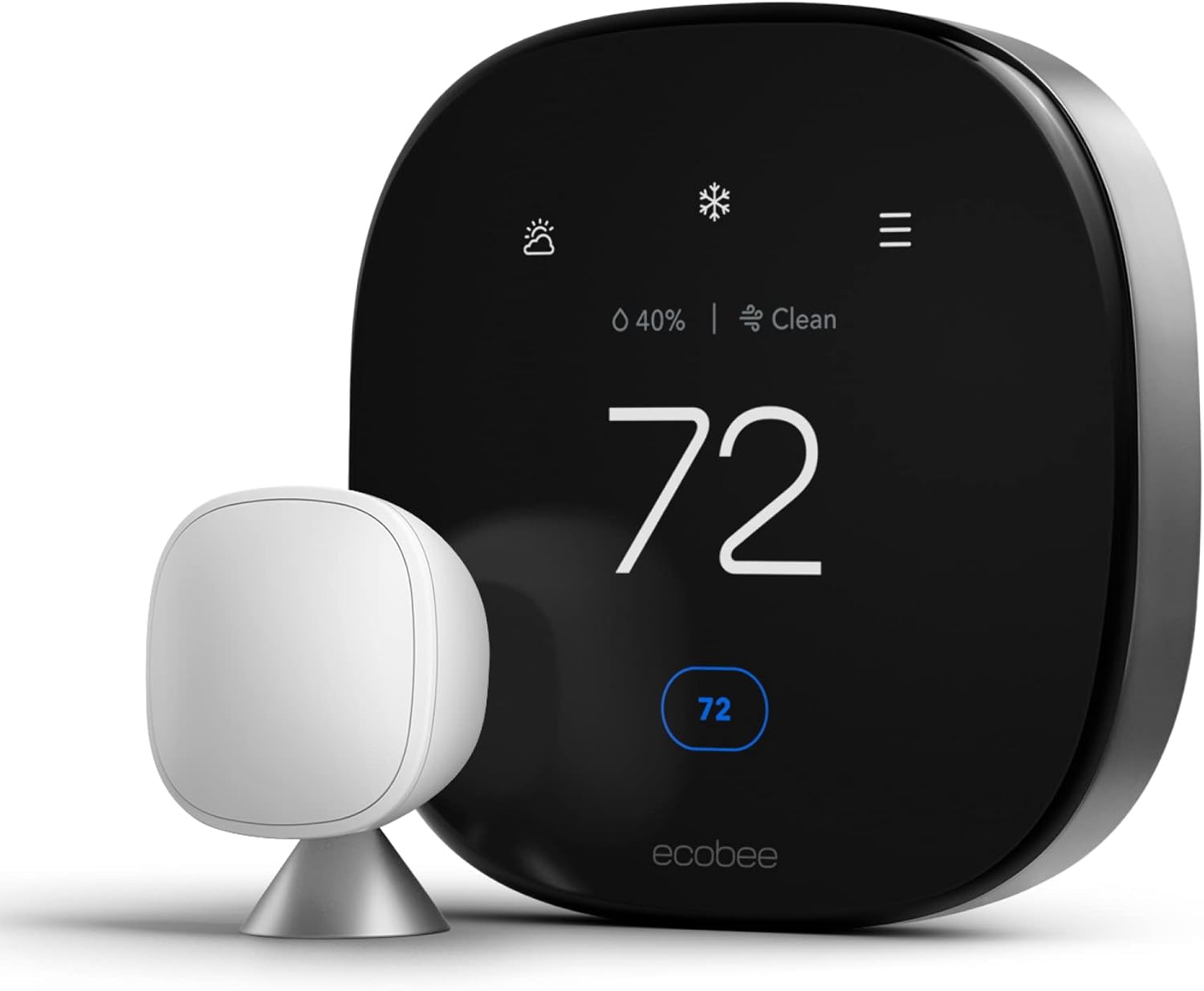
Ecobee Smart Thermostat Premium
The data-lover’s choice. Comes with a remote room sensor to fix hot/cold spots and built-in air quality monitoring.
Check Price
Honeywell Home T9
The best reliability. Uses RedLINK technology for superior range and connection stability. Great for larger homes.
Check PriceFinal Thought: Whether you choose the rigorous control of a programmable unit or the fluid automation of a smart device, upgrading from a manual thermostat is one of the fastest ways to lower your carbon footprint and keep your wallet happy.


 Home
Home
 Info
Info
 Compare
 Reviews
 Shop
Shop