
Plastic vs aluminum thermostat housing — which is better for your car?
Your car’s thermostat housing may seem like a small part — until it cracks, leaks coolant, and leaves you stranded.
Some links in this guide may earn us a small commission at no extra cost to you. This helps support the site so we can keep creating helpful content.
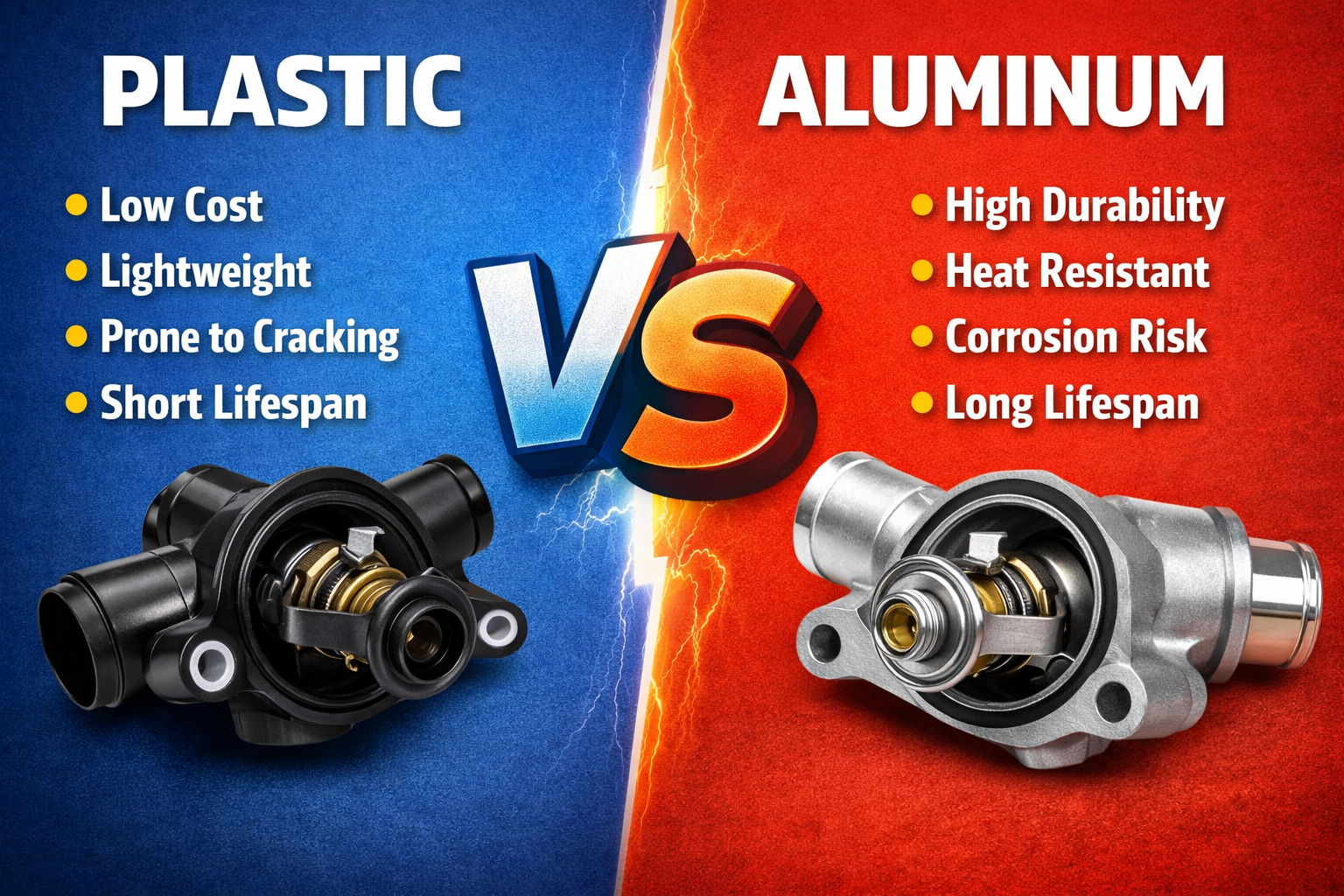
Introduction
Your car’s thermostat housing may seem like a small part — until it cracks, leaks coolant, and leaves you stranded.
If you’re replacing a failed housing or upgrading proactively, you face one big decision: plastic or aluminum?
Most modern cars come with plastic housings from the factory. They’re cheap and lightweight, but over time, repeated heat cycles can cause them to warp, crack, or fail completely.
Aluminum housings cost more upfront, but they are significantly more durable and often last the lifetime of the engine.
In this guide, we break down plastic vs aluminum thermostat housing options — so you can avoid costly failures and choose the right part the first time.
According to automotive manufacturers and repair specialists, thermostat housing failures are one of the most common causes of coolant leaks in modern engines — especially in vehicles with plastic components.
Important: Always confirm fitment for your vehicle’s year, make, model, and engine size before purchasing.
Quick Answer (If You’re in a Hurry)
| Material | Verdict |
|---|---|
| Plastic | Cheaper and lighter, but typically needs replacing every 5–8 years. Best for budget repairs or older vehicles. |
| Aluminum | More expensive, but far more durable and heat-resistant. Often a long-term replacement for most drivers. |
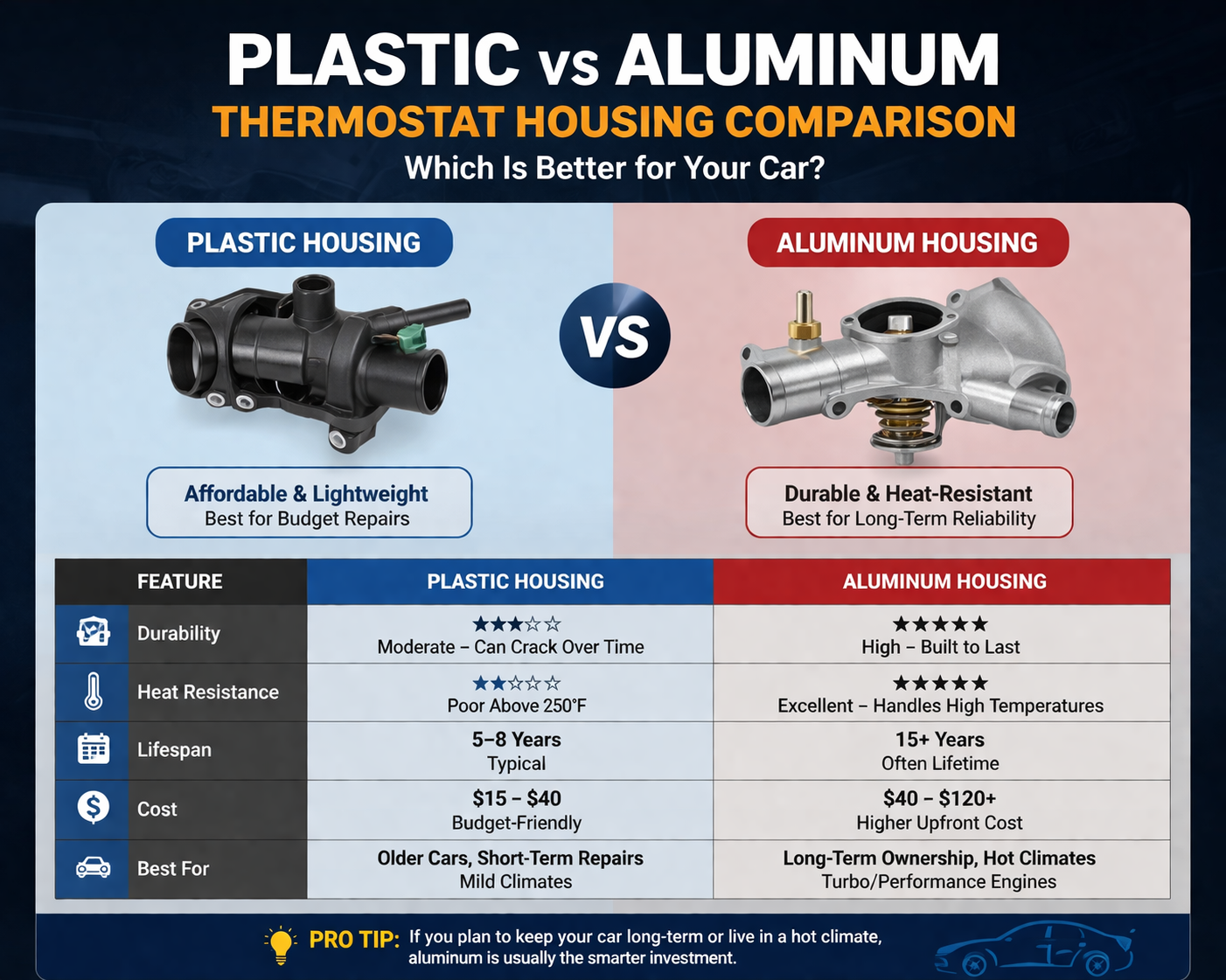
Comparison Table: Plastic vs Aluminum Thermostat Housing
| Feature | Plastic housing | Aluminum housing |
|---|---|---|
| Durability | Moderate — cracks from heat cycles | High — withstands extreme temperatures |
| Heat resistance | Poor above 250°F | Excellent |
| Weight | Very light (0.5–1 lb) | Heavier (1.5–3 lbs) |
| Cost | $15–$40 | $40–$120+ |
| Corrosion resistance | Excellent (won’t rust) | Good — may oxidize over time |
| Installation | Easy — lightweight | Moderate — may require sealant |
| Lifespan | 5–8 years | 15+ years (often lifetime) |
| Best for | Budget repairs | Long-term reliability |
When comparing plastic vs aluminum thermostat housing options, durability and heat resistance are the biggest deciding factors.
Plastic Thermostat Housing – Deep Dive
Plastic housings are standard in most modern vehicles because they are inexpensive and easy to manufacture.
However, repeated heating and cooling cycles can make plastic brittle over time, which is why many fail after several years of use.
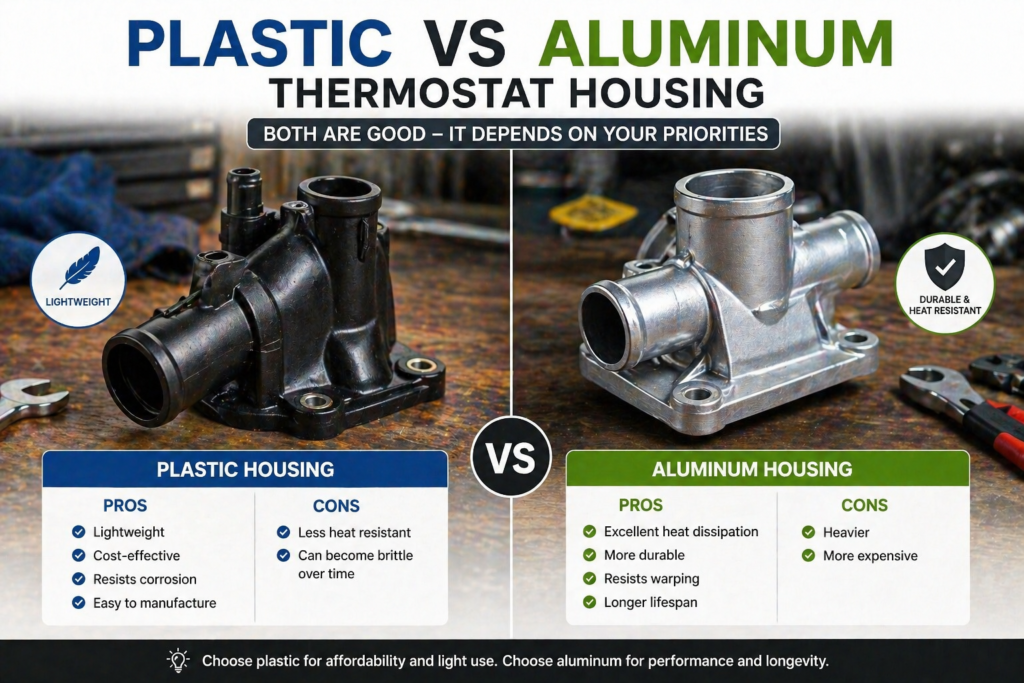
Pros
- Low cost — typically under $40
- Corrosion-proof — won’t rust
- Lightweight — easy to install
- Widely available
Cons
- Becomes brittle over time
- Can warp and cause coolant leaks
- Shorter lifespan — 5–8 years typical
- Can fail suddenly — leading to rapid coolant loss
Real-world insight: Plastic housings often fail without warning — which can quickly lead to engine overheating if not caught early.
Who Should Choose Plastic?
- You plan to sell the car soon
- Your car is older or high mileage
- You need a low-cost repair
- You live in a mild climate
Best Plastic Thermostat Housings on Amazon
1. SecosAutoparts Thermostat Housing – Best for Honda/Acura
A reliable budget option for popular Honda and Acura models.
Key Details:
- Fits: Honda Civic (2002–2005), CR-V (2002–2006), Acura RSX (2002–2006)
- Replaces: 19320-PNA-003, 19301-PNA-003
- Rating: 4.6 ⭐ (50+ reviews)
- Amazon’s Choice
Check latest price on Amazon US
2. Dorman 902-2124 Thermostat Housing – Best for GM Vehicles
A trusted aftermarket option with wide compatibility.
Key Details:
- Fits: Chevy Cruze, Malibu, Trax, Buick Encore, GMC Terrain
- Type: OEM-style replacement
- Reputation: Strong reliability from a trusted brand
Check latest price on Amazon US
Aluminum Thermostat Housing – Deep Dive
Aluminum housings are built for durability and are often used in performance vehicles, trucks, and long-term ownership builds.
Unlike plastic, aluminum maintains its shape under extreme heat and pressure.
Expert insight: Many aluminum housings are CNC-machined or cast, which helps maintain a perfectly flat sealing surface — reducing long-term leak risk.
Pros
- Extremely durable — won’t crack or warp
- Better heat dissipation
- Long lifespan — often a one-time replacement
- Maintains reliable seal over time
Cons
- Higher upfront cost — often 2–3x more
- Heavier — can make installation slightly trickier
- May require sealant during installation
- Must ensure correct fitment
Who Should Choose Aluminum?
- You plan to keep your car long-term (5+ years)
- You drive in hot climates or heavy traffic
- You own a turbocharged or performance engine
- You want to avoid repeat repairs
Best Aluminum Thermostat Housings on Amazon
1. A-Premium Aluminum Thermostat Housing – Best for Chevy/GM 1.4L
A very popular upgrade that solves common plastic housing failures.
Key Details:
- Material: Full aluminum construction
- Fits: Chevy Cruze (2011–2016), Sonic (2012–2020), Trax (2013–2021), Buick Encore (2013–2021)
- Engine: 1.4L Turbocharged
- Replaces: 55565336, 902-808, 55593034, 55579010
- Includes: Thermostat, gasket, sensor, O-ring — complete kit
- Rating: 4.6 ⭐ (60+ reviews)
- Amazon’s Choice + Overall Pick
Why buyers like it:
- “Perfect bolt-on replacement” — ⭐⭐⭐⭐⭐
- “Great upgrade from plastic” — ⭐⭐⭐⭐⭐
- “Excellent value and durability” — ⭐⭐⭐⭐
⚠️ Note: Some users report slightly longer warm-up times — a small trade-off for aluminum durability.
Check latest price on Amazon US
2. Dorman 902-211 Aluminum Housing – Best Budget Aluminum for Ford/Mercury
A more affordable aluminum upgrade option.
Key Details:
- Material: Aluminum
- Fits: Ford Freestar (2004–2007), Windstar (1998–2003), Mercury Monterey (2004–2007)
- Replaces factory plastic housing
- Price: Typically $15–30
Check latest price on Amazon US
5 Key Factors to Consider Before Buying
| Factor | Plastic | Aluminum |
|---|---|---|
| Climate | Cool/mild climates | Hot climates |
| Ownership | Short-term (1–3 yrs) | Long-term (5+ yrs) |
| Installation | Easier DIY | Better for long-term installs |
| Vehicle age | Older cars | Newer cars |
| Engine type | Standard | Turbo/performance |
Real Customer Feedback
Plastic Users:
- “Cheap and easy, but I had to replace it again later.”
- “Cracked around 70k miles — switched to aluminum after.”
Aluminum Users:
- “Installed once and no issues since.”
- “Much more reliable than the original plastic part.”
FAQs
Can I replace plastic with aluminum?
Yes — as long as fitment matches your engine.
Which is better in hot climates?
Aluminum is the clear winner.
Does aluminum cause corrosion?
Only if improperly installed — use proper sealant or gaskets.
Will aluminum improve performance?
It helps maintain stable engine temperature but won’t increase horsepower.
How do I check fitment?
Use Amazon’s fitment tool or check your engine specs.
What does installation cost?
Typically $100–$250 depending on labor.
Final Verdict
| Choose plastic if… | Choose aluminum if… |
|---|---|
| Tight budget | Want long-term reliability |
| Selling soon | Keeping the car |
| Mild climate | Hot climate or heavy driving |
| High-mileage vehicle | Turbo/performance engine |
Our recommendation:
If you’re doing the repair yourself, spending an extra $20–50 on aluminum is usually worth it. It saves time, money, and hassle in the long run.
Where to Buy
Plastic Options:
Aluminum Options:
Related Guides
If you’re also upgrading your home heating system, check out our Nest vs Ecobee comparison.
For heat pump users, see our guide to the best thermostat for Bosch heat pumps.
Understanding thermostat housing differences helps you avoid costly repairs and choose the right part.
Final Thoughts
When it comes to plastic vs aluminum thermostat housing, the decision is simple:
- Plastic saves money upfront
- Aluminum saves money (and headaches) long-term
Understanding the differences between plastic vs aluminum thermostat housing options helps you make a smarter long-term decision for your vehicle.
Choosing between plastic vs aluminum thermostat housing depends on your budget, durability needs, and long-term reliability.
Reviewed by The Thermo Expert Team
The Thermo Expert Team researches and compares smart thermostats, heating systems, and common HVAC issues to provide clear, practical advice for homeowners. Our goal is to help you understand problems quickly and choose the right solution with confidence. Learn more about us →