Key Features to Compare When Buying a Smart Thermostat
A complete buyer’s guide to understanding C-wires, sensors, AI scheduling, and HVAC compatibility before you buy.

Choosing a smart thermostat isn’t just about picking the sleekest design. It’s about ensuring the device can safely control your specific HVAC equipment while delivering the automation features that actually save money. This guide breaks down the critical technical specifications and features you must compare.
Thermostat Compatibility With HVAC Systems
Before looking at smart features, you must verify the voltage and system type.
Hardwired vs Battery-Powered Thermostats
Not all homes have a “Common Wire” (C-Wire) available at the wall. While some thermostats claim to be “battery-powered,” relying solely on batteries for a Wi-Fi device can lead to connectivity dropouts. If you lack a C-wire, look for models that include a Power Extender Kit (PEK) in the box.
Supported HVAC Types & Multi-Stage Systems
Most basic smart thermostats handle single-stage heating (W1) and cooling (Y1). However, if you have a heat pump with auxiliary heat or a high-efficiency 2-stage furnace, you need a thermostat with multi-stage terminals (W2, Y2, O/B). Using a single-stage thermostat on a multi-stage system will result in efficiency loss.
Connectivity & Smart Home Integration
Wi-Fi vs. Mesh Networks (Zigbee/Thread)
Wi-Fi is standard, but it can be power-hungry. Matter over Thread is the emerging standard, creating a self-healing mesh network that works even if your internet goes down. If you have a large home, consider if you want a device that clogs your Wi-Fi bandwidth or one that integrates into a Hub (like SmartThings).
Voice Assistant Support
Check for native integration. While almost all support Alexa and Google Assistant, Apple HomeKit support requires a specific authentication chip or software certification, limiting your options to brands like Ecobee, Emerson Sensi, and newer Nest models.
Sensors & Monitoring Features
Remote Temperature & Motion Sensors
A single thermostat only knows the temperature of the hallway it is installed in. Remote sensors are critical for 2-story homes or bedrooms that run hot/cold. They average the temperature across the house.
For a detailed breakdown of how different brands handle this, see our comparison on Ecobee vs. Honeywell remote sensor range.
Occupancy Detection
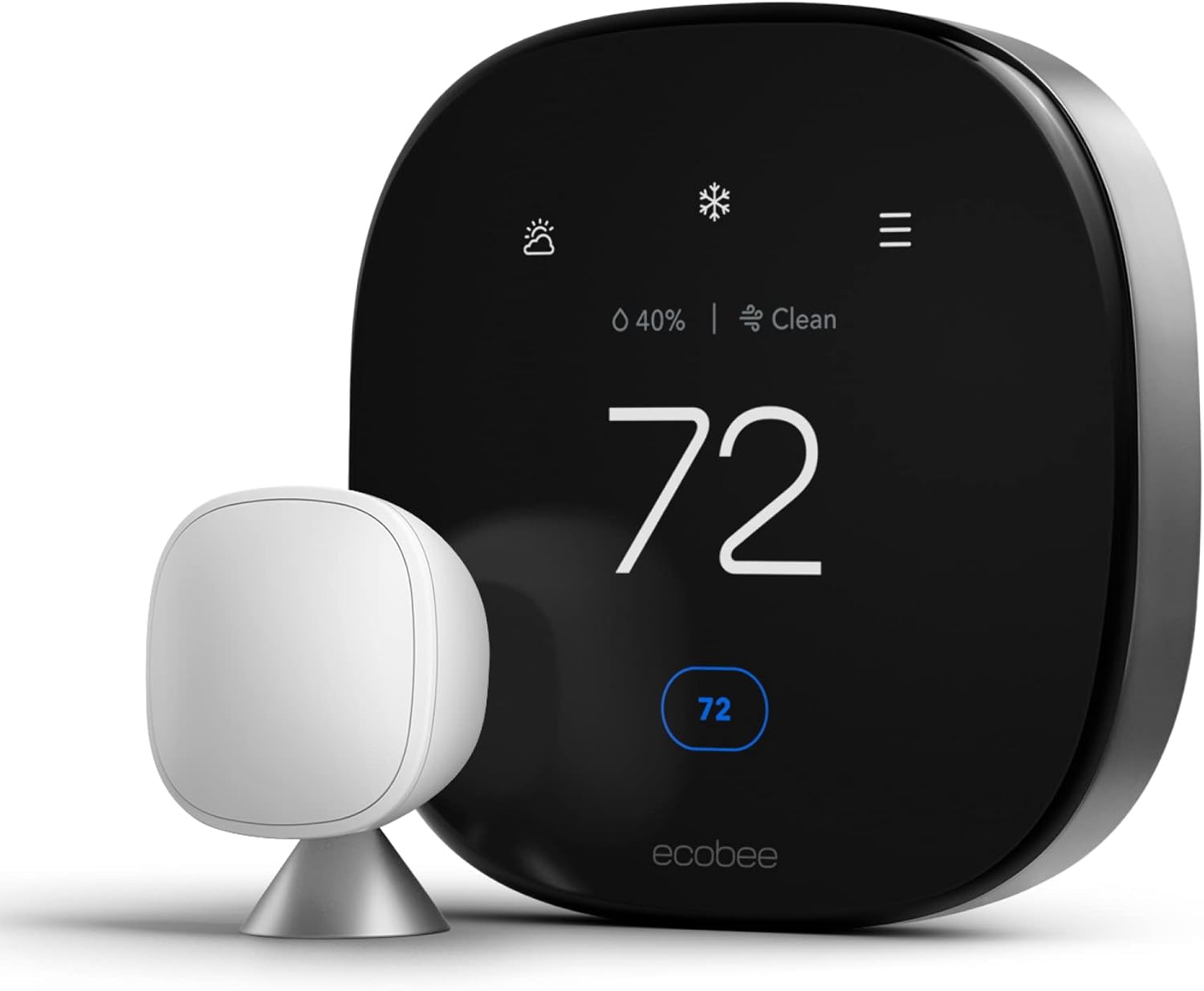
Sensors (PIR) detect if a room is empty. Advanced models (like Ecobee Premium) use “Follow Me” logic, prioritizing temperature control only in the rooms currently occupied.
Scheduling & Learning Capabilities
Adaptive Learning vs. Manual Scheduling
The “Learning” thermostat (pioneered by Nest) builds a schedule based on your manual adjustments over the first week. However, this isn’t for everyone. If you have an unpredictable schedule, erratic “learning” can lead to discomfort.
Manual scheduling or Geofencing (using your phone’s GPS) is often more reliable for erratic shifts. Compare AI Learning vs. Fixed Schedules here to see which fits your lifestyle.
Energy Reports & Savings Tools
Look for apps that provide “Runtime Reports.” These graphs show exactly how many hours your HVAC ran yesterday vs. today. High-end models also integrate with utility “Time of Use” (TOU) rates, pre-cooling your home when electricity is cheap and coasting when it’s expensive.
Display & User Interface
Consider the “WAF” (Wife/Partner Acceptance Factor). A complex interface can be frustrating for family members. Look for:
- Touchscreen Response: Capacitive touch (like a phone) is better than resistive touch (pressure-based).
- Proximity Wake: The screen lights up when you walk by (useful for night lights).
- Legibility: High contrast text for easy reading from across the room.
Installation & Setup
DIY Friendly? Top-tier brands include a bubble level built into the backplate and labels for your wires. Check if the app includes a step-by-step video guide—this is the gold standard for DIY installation.
Battery Life & Power Efficiency
If you cannot install a C-wire, battery life is your #1 metric. Wi-Fi radios drain AA batteries quickly (often in 3-6 months). Look for models using “Power Stealing” (charging a capacitor during HVAC off-cycles) or those optimized for Lithium batteries.
Design, Build Quality & Durability
Plastic vs. Glass/Metal. Cheaper units feel like basic plastic controllers. Premium units use glass faces and metal bodies, which not only look better but resist UV yellowing over time.
Price, Warranty & Support
Smart thermostats range from $50 to $250+. Is the ROI there?
- Budget ($50-$90): Basic Wi-Fi, app control, no remote sensors.
- Mid-Range ($100-$160): C-wire adapters included, better screens, sensor compatibility.
- Premium ($200+): Voice speakers built-in, IAQ monitoring, metal build.
Calculate your potential savings with our Wi-Fi Thermostat ROI Calculator.
| Feature Category | Budget Models | Premium Models |
|---|---|---|
| C-Wire Requirement | Often Required | Usually includes Adapter (PEK) |
| Sensors | Internal Only | Support for Remote Room Sensors |
| Material | Plastic | Glass / Zinc / Metal |
| Smart Home | Alexa / Google | Alexa / Google / HomeKit / Matter |
Frequently Asked Questions
What Features Are Most Important in a Smart Thermostat?
The top three are: 1. Compatibility (C-wire availability), 2. Remote Sensors (for comfort balance), and 3. Geofencing (for effortless savings).
Do All Smart Thermostats Work With My HVAC System?
No. Most work with standard 24V systems. High-voltage baseboard heaters (120V/240V) require specialized thermostats (like Mysa or Sinope). Always check voltage before buying.
Is Wi-Fi Required for All Smart Thermostat Functions?
Wi-Fi is required for app control, voice commands, and weather data. However, the thermostat will still function as a manual temperature controller if the Wi-Fi goes down.
How Much Energy Can a Smart Thermostat Really Save?
EPA Energy Star data suggests an average savings of 8% on heating and 10% on cooling bills. This varies heavily based on your climate and whether you use features like Eco Mode or Geofencing.
Conclusion & Buying Recommendations
When comparing features, prioritize the fundamentals (compatibility and power) over the gimmicks (music playback or fancy animations).
- Best Overall Feature Set: Look for models with robust remote sensor support and C-wire adapters included.
- Best for Smart Home Integrations: Choose a device that supports Matter/Thread for future-proofing.
- Best Budget Option: Focus on reliable app connectivity and basic scheduling without the AI bells and whistles.





 Home
Home
 Info
Info
 Compare
 Reviews
 Shop
Shop