Best Budget Thermostats Under $50: Affordable Climate Control for Every Home
There was a time when owning a smart thermostat was a luxury reserved for those willing to drop $250 on a shiny piece of wall art. In those early days, names like Nest and Ecobee dominated the landscape, commanding premium prices for the privilege of remote scheduling. But the smart home market has matured rapidly. Today, the technology that once cost a fortune has become democratized, leading to an explosion of high-quality, ultra-affordable options. If you’re looking for the best budget thermostats under $50, you no longer have to settle for a “dumb” dial or a non-connected box.
The beauty of a sub-$50 thermostat is that it often provides 90% of the functionality of its $200 counterparts. You still get smartphone control, voice assistant integration with Alexa and Google Home, and energy-saving schedules that can pay for the device itself in just a few months. In this comprehensive guide, we’ll dive deep into the top contenders, analyzing their performance, ease of installation, and long-term reliability. Whether you’re a renter looking for a quick upgrade or a homeowner on a strict budget, these devices prove that comfort shouldn’t cost a month’s rent.

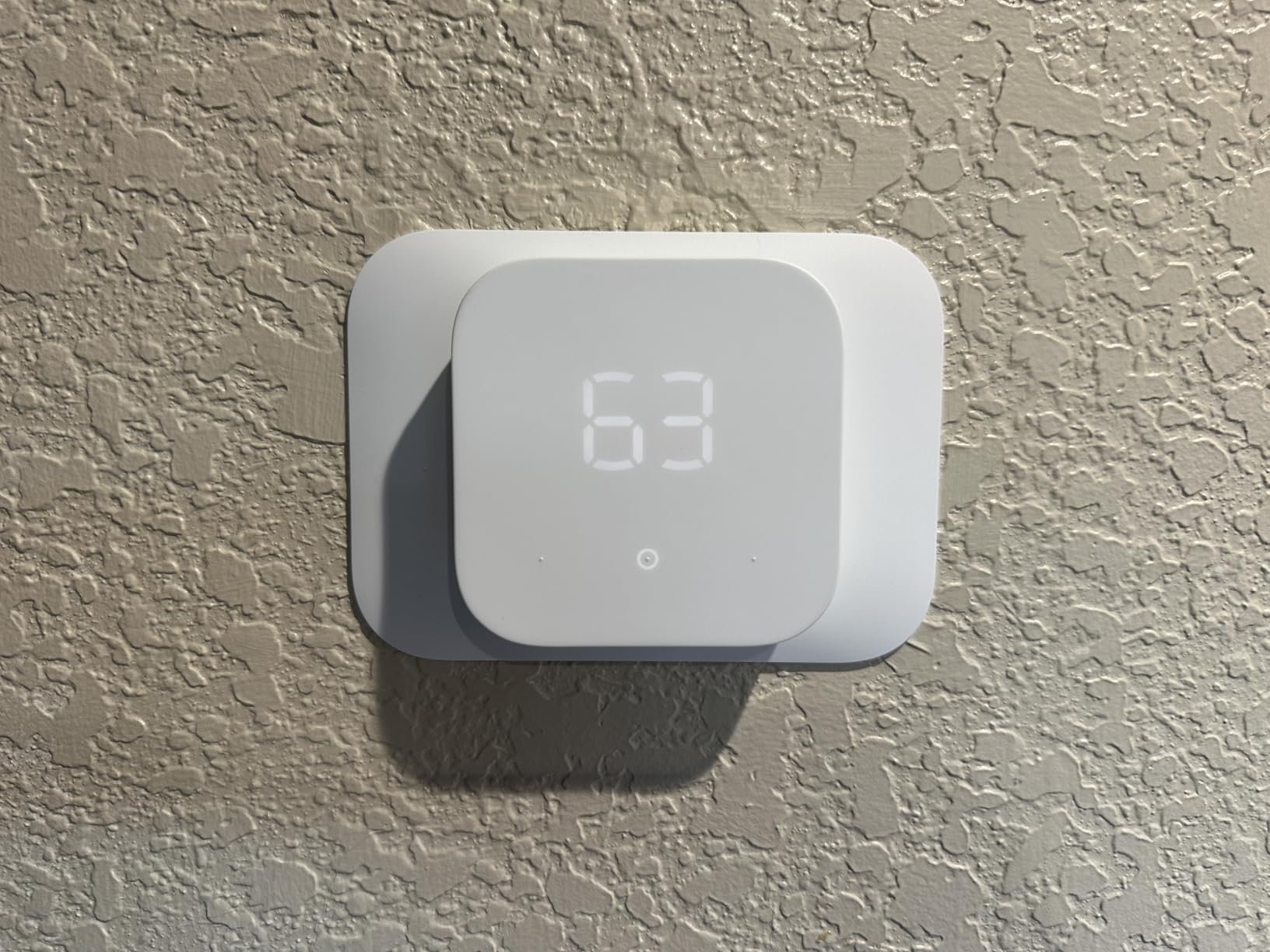
Top Overall Budget Pick: Amazon Smart Thermostat
A powerhouse of value built with Honeywell Home technology, offering seamless Alexa integration for under $50.
Check Price on AmazonMarket Overview: The $50 Sweet Spot
Finding a reliable thermostat under $50 requires a discerning eye. At this price point, you typically find three types of devices: the branded entry-level smart thermostat, the highly-capable newcomer, and the classic programmable (non-Wi-Fi) thermostat. In this guide, we focus primarily on those that offer connected features, as the energy savings from a Wi-Fi-enabled device far outweigh the minor cost savings of a non-connected model.
When evaluating these models, we look for key features such as C-wire requirements, app stability, and compatibility with modern HVAC systems. For example, comparing the Google Nest vs Amazon Smart Thermostat, you’ll find that while Nest has the brand recognition, Amazon’s budget entry offers staggering performance for a fraction of the price. We also keep an eye on how these budget beasts stack up against mid-range favorites like the Honeywell T5.
1. Amazon Smart Thermostat: The Industry Disruptor
The Amazon Smart Thermostat is arguably the reason this “under $50” category has become so competitive. By partnering with Resideo (the makers of Honeywell Home technology), Amazon created a device that is as reliable as a professional-grade unit but priced for the masses. Its clean, minimalist white face and simple touch interface look more expensive than its price tag suggests.
What sets this unit apart is its Automatic Hunches feature. Because it lives within the Alexa ecosystem, it can use “hunches” from your other smart home devices to know when you’ve left the house or gone to bed, adjusting the temperature accordingly. This is a level of “smart” that usually costs three times as much. If you’ve read our Amazon Smart Thermostat review, you know that its biggest hurdle is the C-wire requirement, which is common in this price range.
Pros
- Powered by Honeywell Home tech.
- ENERGY STAR certified.
- Deep Alexa integration.
- Sleek, modern design.
Cons
- Requires a C-wire (common wire).
- No built-in speaker (requires Echo for voice).
- Limited to Alexa ecosystem for best features.

2. Wyze Thermostat: Feature-Packed and Simple
Wyze has built its reputation on making high-end tech affordable, and their thermostat is no exception. Often found hovering right at or below the $50 mark, the Wyze Thermostat offers a premium look with its black glass-like finish and a tactile dial that feels satisfying to turn. It’s a direct competitor to the Ecobee vs Wyze thermostat debate, where Wyze holds its own by offering a much lower entry price.
One of Wyze’s strongest selling points is the inclusion of a C-Wire Adapter in the box. While the Amazon thermostat requires you to buy an adapter separately if your home lacks a common wire, Wyze includes one, making it an incredible value for those with older wiring. Its performance evaluation reveals a highly responsive app and a “Usage” tab that helps you track exactly how much energy you’re consuming day-to-day.
Pros
- C-Wire adapter included for free.
- Responsive physical dial control.
- Works with Alexa and Google Assistant.
- Very detailed energy usage reports.
Cons
- Occasional firmware update bugs.
- App can sometimes feel cluttered.
- No HomeKit support.
3. Honeywell Home RTH6580WF: The Reliable Classic
If you prefer a thermostat that looks like a traditional thermostat but adds Wi-Fi capabilities, the Honeywell RTH6580WF is the “old faithful” of the budget world. It’s not going to win any design awards with its green-backlit LCD screen and push buttons, but it is incredibly durable. Honeywell has been in the thermostat game for over a century, and that heritage shows in the reliability of this unit.
This model is a favorite for landlords and those who want a simple interface that anyone—including guests or older family members—can operate without an app. However, when comparing Honeywell vs Nest, you’ll see a massive gap in aesthetics. This Honeywell model is about utility over beauty. It’s often compared to the Honeywell T5, which is more modern but slightly more expensive.

Reliable, simple, and under $50. The perfect “set it and forget it” budget Wi-Fi thermostat.
Check Price on Amazon4. Govee Smart Thermostat: The Newcomer
Govee is best known for its smart lighting, but their foray into climate control is noteworthy for budget seekers. The Govee Smart Thermostat often dips under $50 during sales and offers a surprisingly robust feature set, including integration with their popular hygrometers and thermometers. In a Wyze vs Govee thermostat comparison, Govee often wins on “ecosystem” synergy if you already own their other sensors.
It’s a compact unit that focuses on app-first control. While it lacks the brand history of Honeywell, it makes up for it with a very modern, colorful app interface that appeals to a younger, tech-savvy audience. For those monitoring specific rooms, Govee’s ability to pair with remote sensors (sold separately) is a major plus for a budget device.
Comparison Table: Best Budget Thermostats
| Feature | Amazon Smart | Wyze Thermostat | Honeywell RTH6580WF |
|---|---|---|---|
| Price Range | $45 – $59 | $40 – $55 | $45 – $60 |
| C-Wire Required | Yes | Yes (Adapter Incl.) | Yes |
| Voice Control | Alexa | Alexa/Google | Alexa/Google/HomeKit |
| Geofencing | Yes (Hunches) | Yes | No |
| Design | Modern/Minimalist | Glass/Dial | Traditional LCD |
Buying Guide: What to Look for Under $50
Shopping in the bargain bin doesn’t mean you should ignore the specs. There are several technical “deal-breakers” that can turn a cheap purchase into a expensive headache. Here is what you need to verify before hitting that “Buy Now” button:
1. The C-Wire (Common Wire) Situation
Almost every thermostat under $50 requires a C-wire to power its Wi-Fi radio. Without it, the thermostat won’t be able to stay connected to your network. If your home doesn’t have a C-wire, look for models like Wyze that include an adapter, or budget for an external transformer. Comparing the Nest vs Sensi thermostat can give you an idea of how different brands handle power—Sensi is another brand that often works without a C-wire on certain models, though usually at a higher price point.
2. HVAC Compatibility
Most budget thermostats are designed for standard 24V systems (gas, electric, or oil). If you have high-voltage baseboard heaters, these $50 smart thermostats will not work and could be dangerous. For those specific needs, you’ll need specialized equipment like those found in our Mysa vs Sinope guide.
3. App Reliability
A smart thermostat is only as good as its app. Under $50, you’ll find that Amazon and Honeywell offer the most stable experiences. Wyze is excellent but can occasionally suffer from server-side outages. Always check recent app store reviews to see if users are reporting connectivity issues.
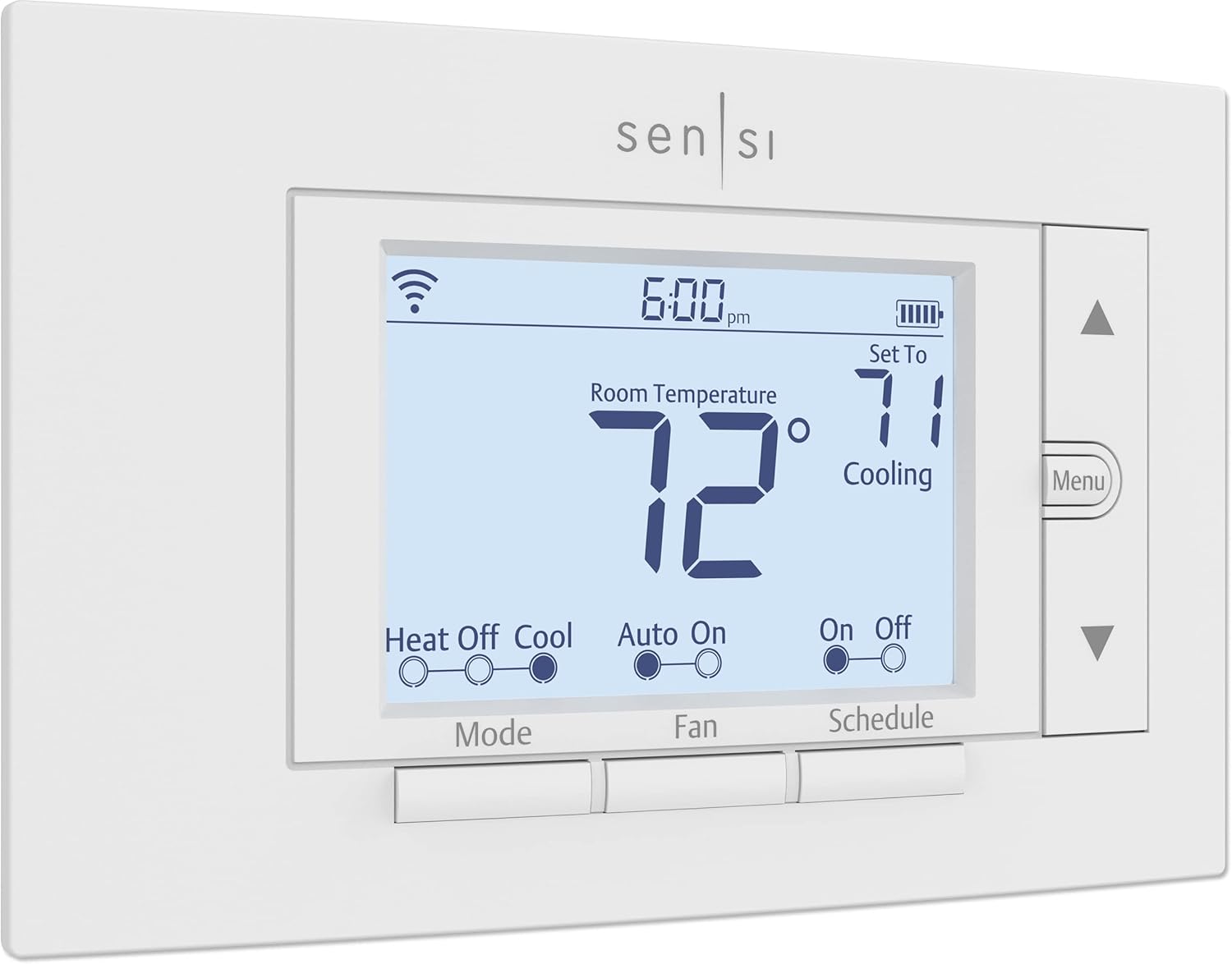
Honorary Mention: Emerson Sensi ST55. Often just over $50, it is a rock-solid alternative with great compatibility.
Compare Sensi vs EcobeePerformance Evaluation: Do They Actually Save Money?
The short answer: Yes. Even a basic Wi-Fi thermostat under $50 can save you roughly 10-15% on your annual heating and cooling costs. The primary driver of these savings isn’t “AI” or complex algorithms; it’s the simple ability to ensure the AC isn’t blasting while you’re at work. By using geofencing or simple schedules, these devices pay for themselves within a single summer or winter season.
When we look at the Ecobee3 Lite vs Google Nest, we see that people often pay more for sensors and design. But the core function—turning the HVAC on and off at the right time—is handled just as well by the Amazon Smart Thermostat or the Wyze model. For a more detailed look at the entry-level premium market, check our Amazon Smart Thermostat vs Ecobee comparison.
Frequently Asked Questions
Yes, most budget models from Amazon, Wyze, and Honeywell are designed for DIY installation. They come with labeled stickers and video guides. Just be sure to turn off your breaker first!
Most thermostats under $50 do NOT support HomeKit. The Amazon Smart Thermostat and Wyze are limited to Alexa and Google Home. If you need HomeKit, you may need to increase your budget for a Sensi or a Honeywell T5.
Your thermostat will continue to work based on the last schedule it received. You can still adjust the temperature manually using the physical buttons or dial on the unit itself.
No, as long as it is compatible with your system’s voltage (24V) and wired correctly. These devices use the same relay technology as expensive models to trigger your furnace or AC.
Amazon’s model is better if you are already an Alexa user. Wyze is better if you need an included C-wire adapter or prefer a physical dial for control.
They generally don’t “learn” like a Nest, but they use geofencing and smart schedules to achieve similar energy savings. Check out our Nest 4th Gen rumors to see how much the “learning” tech is evolving.
It is worth it if you want the most reliable Wi-Fi connection and don’t care about modern looks. It is a workhorse that rarely fails.
The C-wire provides a continuous loop of power to keep the Wi-Fi connected. Without it, the battery would drain in days trying to maintain a wireless signal.
Final Verdict: Which Budget Thermostat Should You Choose?
Choosing the best budget thermostat under $50 doesn’t have to be a compromise. If you are an Amazon Alexa user, the Amazon Smart Thermostat is the clear winner for its build quality and seamless integration. For those who need a C-wire adapter included and want a more “gadget-forward” feel, the Wyze Thermostat is a stunning piece of hardware for the price.
If you’re still on the fence, consider your ecosystem. If you’ve spent years building out a Honeywell-centered home, stick with the RTH6580WF. Regardless of your choice, moving from a manual thermostat to any of these smart budget options is one of the smartest upgrades you can make for your home this year. Ready to take the plunge?