What a Battery-Powered Smart Thermostat Is and How It Works
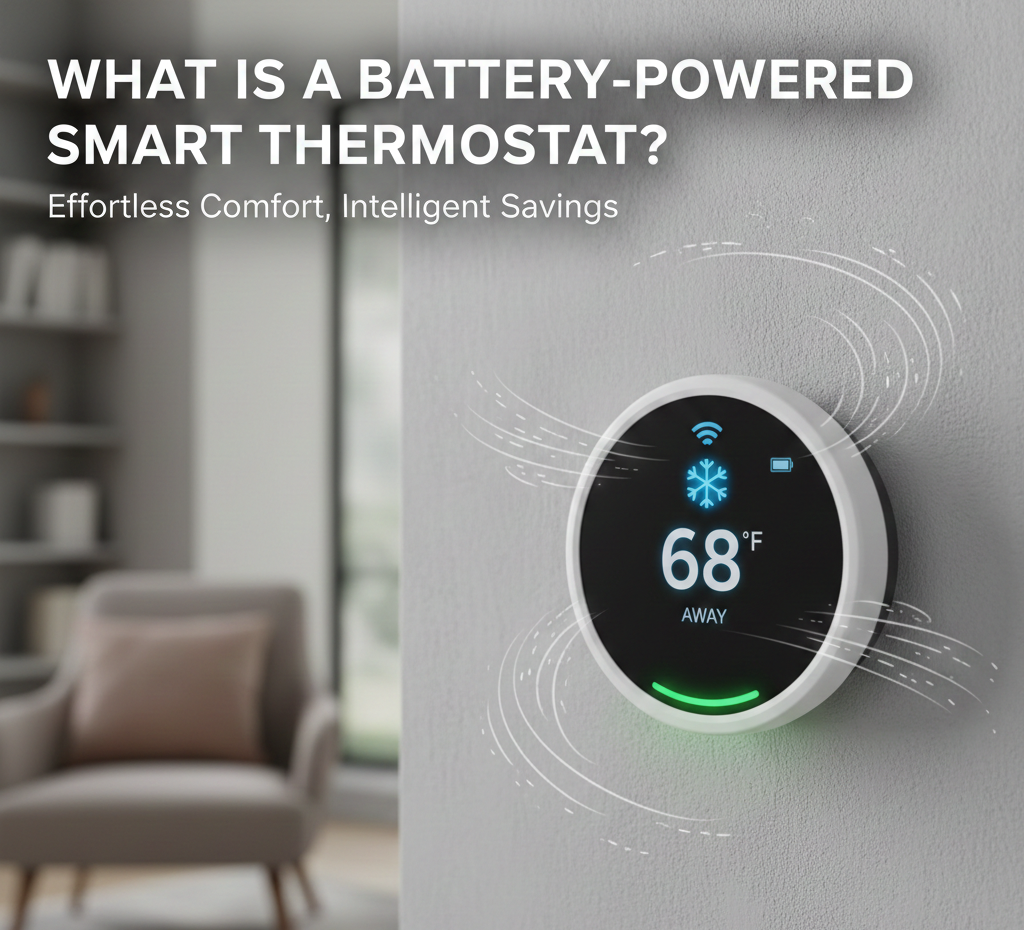
In the rapidly evolving landscape of home automation, the battery-powered smart thermostat has emerged as a critical bridge for homeowners dealing with legacy HVAC systems. Unlike traditional smart units that demand a constant stream of 24VAC power—typically delivered via the elusive “Common” or C-wire—these independent devices utilize high-density energy cells to drive their logic boards, Wi-Fi radios, and backlit displays. This architectural shift removes the primary barrier to smart home entry: the need for expensive professional rewiring or complex “add-a-wire” kits.
How a Battery-Powered Smart Thermostat Works
The core engineering challenge of a battery-operated unit is power management. A standard Wi-Fi chip consumes significant energy when maintaining a constant connection to a router. To circumvent this, manufacturers utilize a “Sleep-and-Wake” cycle. The device spends 99% of its time in a low-power state, only engaging the Wi-Fi radio when a specific threshold is met—such as a manual temperature adjustment via the physical dial or a scheduled update from the cloud.
Furthermore, these units often employ Power Stealing (or Power Sharing) technology. When the heating or cooling is running, the thermostat may “steal” a tiny amount of electricity from the active circuit to supplement the batteries. However, this is risky on sensitive modern control boards, which is why having high-quality internal batteries is the primary fail-safe. Modern protocols like Thread and Matter have significantly improved this; they allow the device to communicate with a hub using much less energy than traditional Wi-Fi, often extending battery life from six months to over two years. This is why many experts recommend HVAC & Smart Thermostats that support these newer, low-energy standards.
Battery-Powered vs. Wired Smart Thermostats
The debate between wired and battery-powered models often comes down to responsiveness vs. versatility. A hardwired (C-wire) thermostat is an “always-on” node. This means when you change the temperature on your smartphone app, the thermostat reacts instantly. Because it has an unlimited power supply, it can support high-resolution color touchscreens, proximity sensors that light up when you walk by, and continuous air quality monitoring.
On the flip side, battery-powered models are designed for the “set it and forget it” crowd. While they may have a 5-10 second lag when receiving commands from an app, they offer unmatched reliability during specific HVAC failures. If your furnace’s transformer blows, a wired thermostat goes dark, leaving you with zero data. A battery-powered unit continues to log temperature data and maintain its internal clock, providing a clearer diagnostic picture once repairs begin. For those looking to upgrade, understanding the nuances of HVAC & Smart Thermostats is essential for choosing between these two distinct power delivery methods.
Pros and Cons of Battery-Powered Models
The most significant advantage is Universal Compatibility. If you have an old house with just two wires (R and W) coming out of the wall, a battery-powered unit is likely your only smart option. These are commonly known as “dry contact” or “millivolt” systems, often found in wall heaters or older boilers. Installation is truly DIY; you simply mount the backplate, snap in the wires, and insert the batteries. There is no risk of blowing a fuse on your furnace control board because the thermostat isn’t drawing power from it.
However, the trade-off is maintenance overhead. Unlike a wired unit that you can ignore for a decade, a battery unit will eventually fail if you ignore the “Low Battery” warnings. In extreme cold, alkaline batteries can see a drop in voltage, potentially causing the Wi-Fi to disconnect right when you need to monitor your home’s heat from afar. This is why high-performance HVAC & Smart Thermostats often require Lithium-ion cells to ensure consistent voltage regardless of the ambient room temperature.
When a Battery-Powered Thermostat Makes Sense
This solution is tailor-made for three specific demographics. First: Renters. If you cannot legally modify the wiring in your apartment but want to save 15% on your heating bill, a battery-powered smart thermostat is a non-destructive upgrade. When you move out, you can swap the old “dumb” thermostat back in five minutes.
Second: Zoned Systems. In homes with multiple zones controlled by dampers, the wiring can be a nightmare. Battery units simplify the secondary zones. Third: Heritage Homes. Pulling new thermostat wire through plaster and lath walls is a labor-intensive process that can cost hundreds of dollars. Using a battery-operated unit with a wireless bridge (like the Honeywell E-Series or Nest with a Power Connector) saves the architectural integrity of the home. This is a key strategy discussed in modern guides on HVAC & Smart Thermostats.
Common Battery Types and Lifespan
Not all batteries are created equal for smart home use. Standard Alkaline batteries are prone to leaking over time, which can destroy the delicate circuitry of a $200 thermostat. Furthermore, their discharge curve is linear, meaning the device’s performance may degrade as the batteries hit 50% capacity. Lithium AA batteries (like Energizer Ultimate Lithium) are the professional choice. They operate in temperatures from -40°F to 140°F, have a shelf life of 20 years, and maintain a high voltage until they are nearly depleted.
In 2026, we are also seeing a rise in Supercapacitor-assisted units. These devices use a small internal battery but also store a charge in a capacitor to handle the “high-burst” energy needs of a Wi-Fi transmission. This prevents the “reboot loop” that occurs when a thermostat tries to connect to the internet with weak batteries. Regardless of the type, expect to change your power source every 18 months for optimal performance.





 Home
Home
 Info
Info
 Compare
 Reviews
 Shop
Shop