
Line Voltage vs. Low Voltage Thermostats
Installing the wrong one can destroy your HVAC system or start a fire. Here is the definitive guide to identifying your wiring in 2 minutes.
One of the most common—and dangerous—mistakes homeowners make when upgrading their home heating is buying the wrong type of thermostat. While they look similar on the store shelf, line voltage and low voltage thermostats operate on entirely different electrical principles.
Confusing the two isn’t just about the thermostat not working; it can lead to blown transformers, fried circuit boards, or even electrical fires. Whether you are installing a thermostat for baseboard heaters or a central furnace, understanding this distinction is step one.
The “Pasta Test”: Identify Your Voltage in 2 Minutes
You don’t need a multimeter to tell the difference. You just need to look at the wires coming out of the wall.
Line Voltage (High)
The Linguini Test
Wires are thick, stiff, and usually Black, Red, or White. They look like the wires connected to a wall outlet.
Voltage: 120V – 240V
Low Voltage
The Angel Hair Test
Wires are very thin, flexible, and multicolored (Red, White, Green, Yellow, Blue). They look like doorbell or phone wires.
Voltage: 24V
Deep Dive: Line Voltage Thermostats
Also known as: High Voltage, 120V/240V, Direct Wire.
Line voltage thermostats act as a “dam” for electricity. The full power that runs your heater flows through the thermostat itself. When the room is cold, the thermostat opens the gate, and high-voltage electricity rushes to the heater.
Where You’ll Find Them:
- Electric Baseboard Heaters
- Wall Heaters (Fan Forced)
- Cove Heaters
- In-ceiling Radiant Heat
Pros & Cons:
- Pros: Simple design, no transformer needed, robust.
- Cons: “Temperature Swing” (rooms can get too hot/cold before it clicks on/off), safety risk if handled improperly, limited smart features historically.
If you have this system and want smart control, you cannot use a standard Nest or Ecobee. You need a dedicated line-voltage smart thermostat. Read our Mysa Smart Thermostat review for the best option in this category.

Best for Line Voltage: Mysa Smart Thermostat
Designed specifically for high-voltage electric heating (120V-240V). Works with Apple HomeKit, Alexa, and Google Assistant. No additional relays required.
Check Price on AmazonDeep Dive: Low Voltage Thermostats
Also known as: 24V, Central Control.
Low voltage thermostats are the “brain” of the operation, not the muscle. They run on a safe 24 volts provided by a transformer on your furnace. They send gentle signals to tell the HVAC equipment to turn on or off.
Where You’ll Find Them:
- Central Gas/Oil Furnaces
- Central Air Conditioning
- Heat Pumps
- Boilers
Pros & Cons:
- Pros: Extremely precise temperature control, vast selection of smart models, safe to handle wires.
- Cons: Requires a C-wire for modern smart features (power), more complex wiring logic (R, W, Y, G, C).
For these systems, you are spoiled for choice. To help you decide, check out our comparison of Nest vs. Ecobee or learn about smart vs. programmable thermostats.

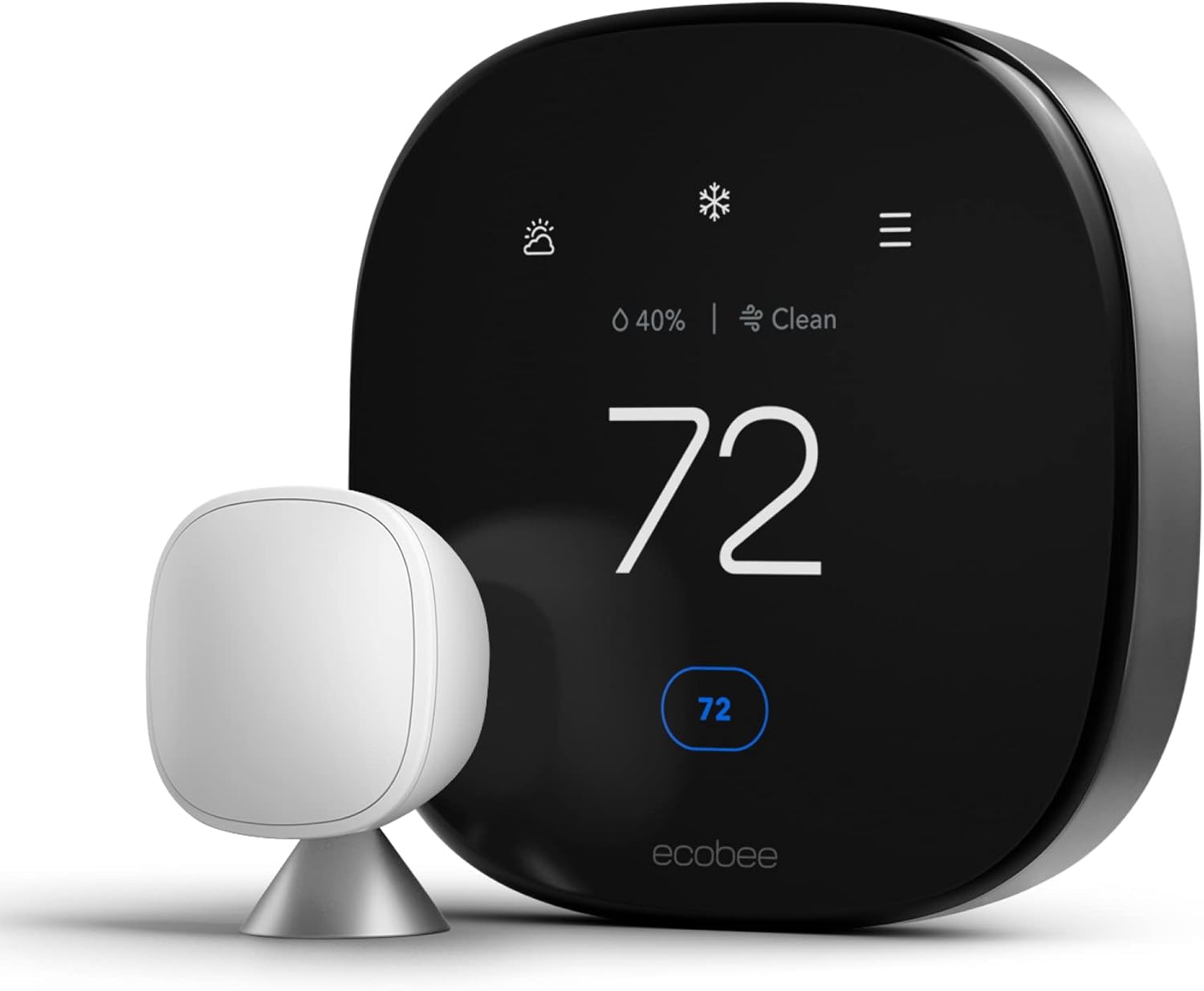
Best for Low Voltage: Ecobee Smart Thermostat Premium
The gold standard for central HVAC systems. Includes a remote room sensor and advanced occupancy detection to save money automatically.
Check Price on AmazonComparison Matrix
| Feature | Line Voltage (High) | Low Voltage |
|---|---|---|
| Voltage | 120V or 240V | 24V (usually) |
| Wire Thickness | Thick (12-14 Gauge) | Thin (18 Gauge) |
| Wire Count | 2 or 4 wires | 2 to 8+ colored wires |
| Primary Use | Electric Baseboards, Wall Heaters | Furnaces, AC, Heat Pumps |
| Shock Hazard | High (Dangerous) | Low (Safe) |
| Nest/Ecobee Compatible? | NO (Requires adapter) | YES |
Can I Convert Line to Low Voltage?
Technically, yes, using a transformer and a relay switch (like an Aube relay), you can force a Nest to control a baseboard heater. However, we rarely recommend this.
It involves stuffing bulky electronics into a junction box, which can violate electrical codes and create heat buildup issues. In 2025, it is much smarter to simply buy a purpose-built line voltage smart thermostat like Mysa or Sinope. They offer the same app control and scheduling features without the messy hacking of your electrical system.





 Home
Home
 Info
Info
 Compare
 Reviews
 Shop
Shop